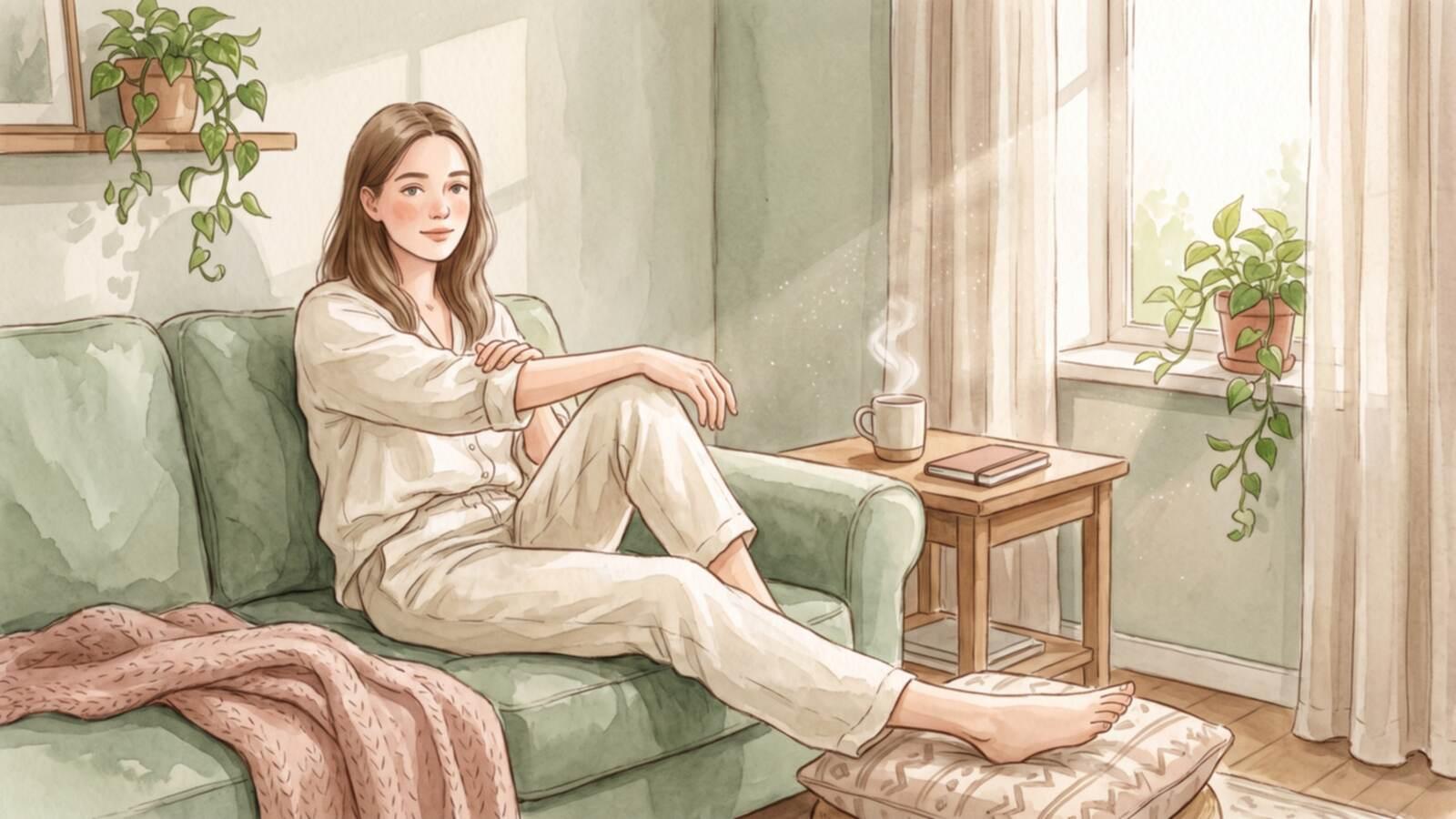
You are lying on the sofa at the end of a long week and something flickers in your calf. A tiny ripple under the skin, there and gone. Ten minutes later it happens again, then in your thigh, then in your eyelid. By midnight you have read three forum threads about nerve disease and you are watching your leg instead of the film.
Can anxiety cause muscle twitching? Yes, it is one of the recognised links. MedlinePlus describes benign twitches, the most common kind, as often found in the eyelids, calf or thumb and frequently linked to stress or anxiety. The NHS lists stress and anxiety alongside tiredness, caffeine, alcohol and some medicines. Below: which features fit the harmless pattern, which ones a doctor looks for instead, and how to keep track without turning your body into a full-time job.
What a Muscle Twitch Actually Is
A twitch, or fasciculation, is a small, brief movement in a small area of muscle. MedlinePlus notes that many twitches go unnoticed altogether. You might see the skin flicker, feel a faint thump, or both. The muscle does not move a joint, and it does not stop you doing anything.
That makes it different from two things people often confuse it with:
- A cramp or spasm is a strong, painful tightening that you cannot release at will, like a calf cramp at night.
- A tremor is rhythmic shaking of a hand, voice or leg. If that is what you notice under stress, our guide to anxiety shaking and trembling covers it.
Twitches also tend to show up at rest. Cleveland Clinic describes the twitches of benign fasciculation syndrome as visible, involuntary and typically happening while the muscle is relaxed, most often in the calves, thighs, eyelids, arms and hands. That is why so many people first notice them lying in bed or sitting still in the evening.
Why Anxiety Makes Twitches More Likely and More Noticeable
Stress rarely arrives alone. A stressful stretch tends to bring the other listed triggers with it: Cleveland Clinic names lack of sleep, caffeine or alcohol, strenuous exercise and a recent viral infection, and MedlinePlus adds twitching after exercise and with stimulants. An exam week of short nights and extra coffee stacks several of these at once.
Then there is attention. A twitch you would have ignored in a calm month becomes impossible to miss once you are already on alert for something going wrong. The more you watch a muscle, the more of its normal flickers you catch, and each one feels like evidence. This is the same loop described in our guide to the health-anxiety symptom-checking cycle: a body cue is flagged, attention locks on, and the frightening explanation wins over the ordinary one.
When twitches are frequent and keep coming back in someone whose examination and tests are normal, doctors may call it benign fasciculation syndrome (BFS). Cleveland Clinic defines it as frequent muscle twitches without an underlying medical condition and notes that the twitches can last for months or even years. It also notes that anxiety is common in people with BFS, and the link runs both ways: worry makes twitches more noticeable, and frequent twitches cause worry.
Is It Anxiety or Something Else?
Most people who search this are really asking whether the twitch could be ALS (motor neurone disease). That is a fair question for a doctor and a bad one for a search engine at 1 a.m. Twitching on its own is not the deciding feature. The NINDS lists twitches among early ALS symptoms, but alongside cramps, stiff muscles, weakness in an arm, leg or the neck, slurred speech and difficulty chewing or swallowing, and it describes muscles that weaken and waste away as the disease progresses.
Benign twitching vs what a doctor looks for
| Features that fit benign twitching | Features a doctor looks for instead |
|---|---|
| Twitches with normal strength: you can still grip, climb stairs and open jars as before (MedlinePlus, Cleveland Clinic) | Weakness: the arm, leg or neck is genuinely harder to use, not just tired or tense (NINDS, MedlinePlus) |
| Muscle size looks the same as always (Cleveland Clinic) | Muscle wasting: a muscle visibly shrinks or thins over time (NINDS, MedlinePlus) |
| Speech, chewing and swallowing unchanged | Slurred or nasal speech, trouble chewing or swallowing (NINDS, Cleveland Clinic) |
| Twitches come and go, worse with stress, short sleep, caffeine or hard exercise (MedlinePlus, NHS, Cleveland Clinic) | Cramps or stiffness together with weakness, rather than twitches alone (NINDS, Cleveland Clinic) |
| Usually one spot at a time, moving around (Cleveland Clinic) | Several muscles affected at once, with a steady spread of weakness (Cleveland Clinic, NINDS) |
| Muscle does not feel weak or stiff | Twitches with numbness or other sensation changes (MedlinePlus) |
The left column is not a self-diagnosis tool and the right column is not a countdown. A clinician checks these with an examination; you do not need to test yourself twenty times a day. If anything on the right applies, book an appointment.
Long-term follow-up adds some reassurance. A Mayo Clinic study (Blexrud et al., 1993, Annals of Neurology) identified 121 patients diagnosed with benign fasciculations who had a normal neurological examination and normal nerve tests apart from the twitches. When they were contacted 2 to 32 years later, none had developed symptomatic motor neuron disease. It was a records review with telephone follow-up, not a trial, and it covers people who had been examined and tested: one more reason to get checked rather than reason it out alone.
What to Do When the Twitching Starts
You cannot switch a twitch off, but you can stop feeding the conditions around it. The NHS advice is plain: rest, find ways to relax, stretch and massage cramped muscles, avoid large amounts of caffeine and alcohol, and try not to worry, since a twitch is usually harmless.
- Stop pressing, tapping and testing the spot. Poking a muscle to see whether it twitches again keeps your attention glued to it. Note it once and move on.
- Look at last night's sleep. Short or broken sleep is on every trigger list above. Our sleep hygiene guide has practical steps if anxiety is part of why the nights are short.
- Check your caffeine. Coffee, energy drinks and pre-workout products add up. Our article on caffeine and anxiety explains how much is too much for anxious bodies.
- Stretch and relax the area. Gentle stretching helps, and a session of progressive muscle relaxation gives your attention a calmer job than monitoring.
- Do not stop a prescribed medicine on your own. MedlinePlus lists some medicines, such as diuretics and corticosteroids, among possible triggers. If you suspect one, ask your prescriber or pharmacist; the NHS lists this as a reason to see a GP.
MedlinePlus says benign twitches usually fade within a few days, while in BFS they can come and go for much longer. A lingering twitch is not, on its own, a sign of something serious, but it is a fair reason to get it looked at.
Find the Pattern Without Feeding the Fear
A short log can help a doctor, and it can help you see that twitches follow your week rather than a disease. The trick is to keep it brief, once a day, not every time you feel a flicker.
14-day twitch log
| Column | What to write (once a day, evening) |
|---|---|
| Location | "Left calf," "right eyelid," "moved around" |
| When | Mostly at rest, in bed, after exercise, during the day |
| Sleep | Hours slept last night, roughly |
| Caffeine | Cups of coffee, tea or energy drinks |
| Exercise | None, light, hard |
| Stress (0-10) | One number for the day |
| Strength check | "Normal" if daily tasks felt normal; anything else, write what changed |
After two weeks, look across the rows. If twitches cluster after short nights, heavy coffee days or stressful stretches, that is useful context to bring to an appointment. If the strength column ever says something other than "normal," take the log to a doctor.
If you already use AnxietyPulse, logging your anxiety level and a quick note such as "calf twitching, slept 5 hours" can show whether twitch-heavy days line up with high-anxiety days. The app tracks anxiety, not muscle activity, so it does not replace an examination. Keep the note brief; the aim is to spot a pattern, not to log every flicker.
If you notice you are checking far more than once a day, searching symptoms repeatedly, or asking others for reassurance, that is the health-anxiety pattern the NHS describes. Its self-help advice includes keeping a diary of how often you check and gradually cutting back, and it notes that talking therapy such as CBT can help. When a muscle cue keeps setting off the worst-case story, our guide to catastrophizing shows how to slow that chain down.
When to See a Doctor
The NHS advises seeing a GP if:
- a twitch lasts more than 2 weeks
- you have twitches in more than one place
- the affected area feels weak or stiff
- you think a prescribed medicine may be causing it
MedlinePlus also advises contacting a provider for long-term or persistent twitches, or twitches that come with weakness or loss of muscle. Seek help sooner for slurred speech, trouble swallowing, or weakness that is getting worse.
What the visit usually involves. A provider takes a history (when the twitching started, how often, which muscles, whether it stays in one place, cramps, other symptoms) and does a physical examination, according to MedlinePlus; Cleveland Clinic describes a neurological exam. Depending on what they find, tests may include blood tests for electrolytes and thyroid function, an electromyogram (EMG), nerve conduction studies, or imaging. Cleveland Clinic notes that BFS is diagnosed by ruling out other causes, so a normal examination is part of how the benign answer is reached. Bring your two-week log and a list of medicines and supplements.
Frequently Asked Questions
Can anxiety cause eyelid twitching?
Eyelid twitches are among the most common benign twitches. MedlinePlus names the eyelids, and the NHS says twitches in the eyes are particularly common, with stress, tiredness and caffeine all on its list. See a GP if the twitch lasts more than two weeks or spreads to other places.
Why do I have muscle twitching all over my body?
Twitches that move around from calf to arm to eyelid are typical of the benign pattern Cleveland Clinic describes, where twitches usually affect one spot at a time. The NHS still lists twitches in more than one place as a reason to see a GP, so book a check rather than trying to rule things out yourself.
Why do my muscles twitch more at rest or at night?
Benign twitches typically show up when the muscle is relaxed, according to Cleveland Clinic, and evenings give you the quiet to notice them. Lack of sleep is also a listed trigger, so a run of bad nights can make evening twitching worse.
How long does anxiety muscle twitching last?
MedlinePlus says common benign twitches usually fade within a few days. When twitching is frequent and recurring, as in benign fasciculation syndrome, Cleveland Clinic notes it can come and go for months or even years. The NHS advises seeing a GP if a twitch lasts more than two weeks.
Does magnesium stop muscle twitching?
None of the sources used here recommend magnesium as a treatment for twitching. MedlinePlus lists dietary deficiencies and low potassium among possible causes of twitching, which a doctor can check with a blood test rather than you guessing. Our magnesium and anxiety guide covers the evidence for anxiety itself; if you want to try a supplement, ask a doctor or pharmacist first, especially if you take other medicines or have kidney problems.
Sources
- MedlinePlus, "Muscle twitching". Definition, benign twitches linked to stress or anxiety, other causes, when to contact a provider, examination and tests.
- NHS, "Twitching eyes and muscles". Common triggers, self-care, and reasons to see a GP.
- Cleveland Clinic, "Benign Fasciculation Syndrome". Locations, triggers, how BFS differs from ALS, diagnosis and duration.
- NINDS, "Amyotrophic Lateral Sclerosis (ALS)". Early ALS symptoms and diagnostic tests.
- Blexrud MD, Windebank AJ, Daube JR. "Long-term follow-up of 121 patients with benign fasciculations." Annals of Neurology, 1993;34(4):622-625. doi:10.1002/ana.410340419.
- NHS, "Health anxiety". Checking and reassurance patterns, self-help, and talking therapy.
This article is for informational purposes only and is not a substitute for professional medical advice. See a doctor about twitching that lasts, spreads, or comes with weakness, muscle loss, or changes in speech or swallowing.