AnxietyPulse
Article2026-01-11

Anxiety vs. Panic Attacks: What's the Difference?

A
Anxiety Pulse Team
Editor

If you've ever felt your heart race, your palms sweat, and a wave of dread wash over you, you might have wondered: "Am I having anxiety or a panic attack?" While these terms are often used interchangeably, they describe two distinct experiences with different characteristics, causes, and management strategies.

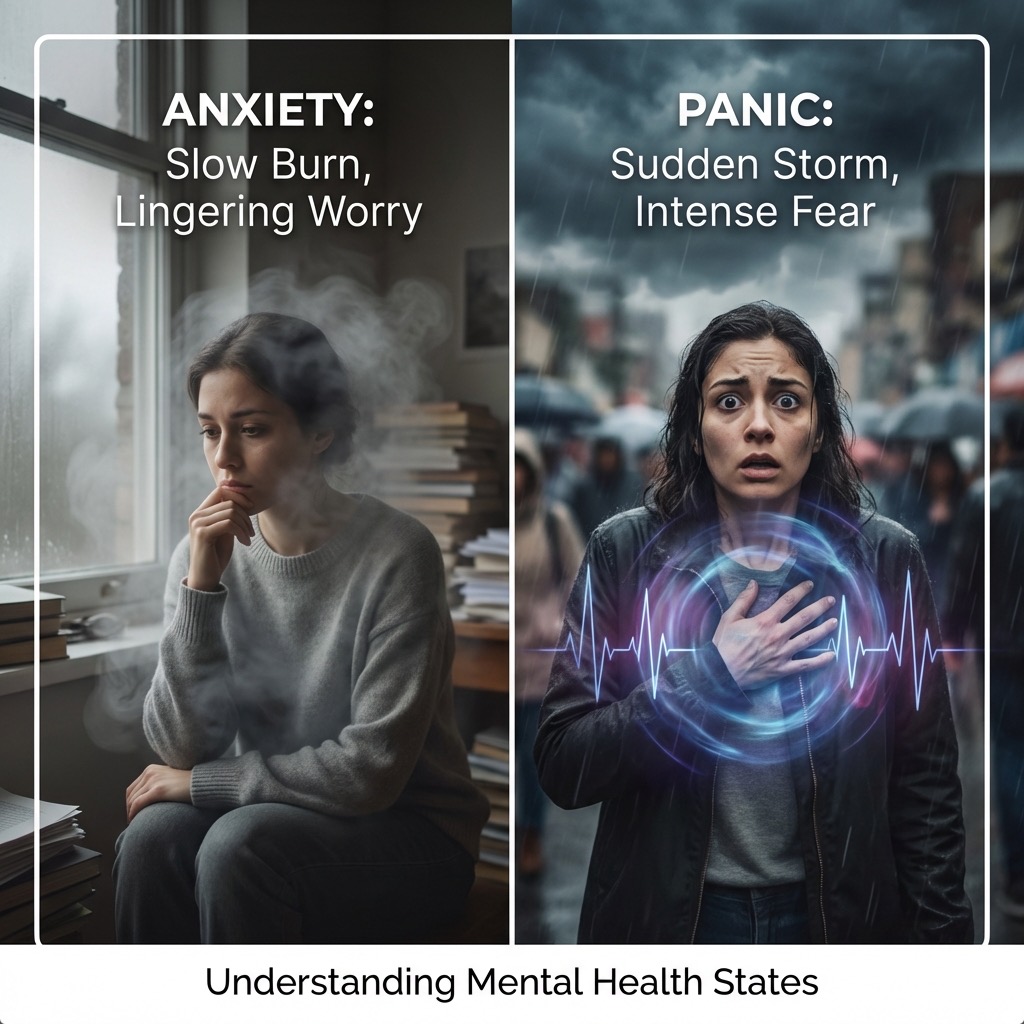
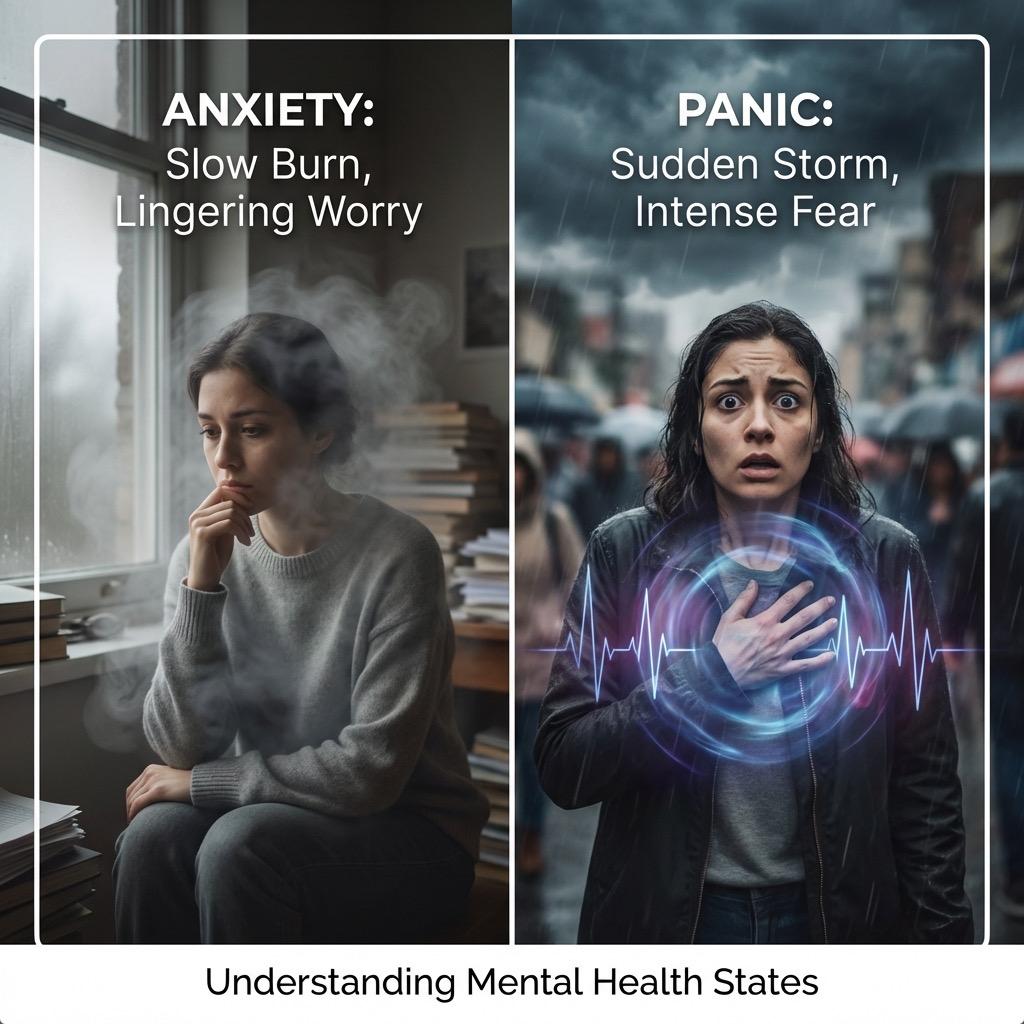
Anxiety vs Panic

Understanding the difference isn't just academic—it's the first step toward getting the right help and developing effective coping strategies.

Anxiety: The Slow Burn

Anxiety is your body's natural response to stress. It's that nagging worry about an upcoming presentation, the persistent unease about finances, or the general sense that something isn't quite right. Anxiety tends to build gradually and can linger for days, weeks, or even months.

Common Symptoms of Anxiety

  • Persistent worry that's difficult to control
  • Muscle tension, especially in the neck, shoulders, and jaw
  • Restlessness or feeling on edge
  • Difficulty concentrating or mind going blank
  • Sleep disturbances — trouble falling or staying asleep
  • Irritability and mood changes
  • Fatigue, even without physical exertion

What Triggers Anxiety?

Anxiety usually has an identifiable cause, even if it feels vague:

  • Work deadlines or job insecurity
  • Relationship conflicts
  • Health concerns
  • Financial stress
  • Major life changes

The key characteristic of anxiety is that it's typically proportional to the stressor (though it may feel exaggerated) and connected to something specific, even if that connection isn't immediately obvious.

Panic Attacks: The Sudden Storm

A panic attack is an entirely different beast. It's a sudden, intense surge of fear that peaks within minutes and triggers severe physical reactions. Many people experiencing their first panic attack believe they're having a heart attack or dying.

Common Symptoms of Panic Attacks

  • Rapid, pounding heartbeat — often the first sign
  • Chest pain or tightness — frequently mistaken for cardiac issues
  • Shortness of breath or feeling of choking
  • Trembling or shaking uncontrollably
  • Sweating, often sudden and profuse
  • Dizziness or lightheadedness
  • Numbness or tingling in hands or feet
  • Feeling of unreality (derealization) or detachment from yourself (depersonalization)
  • Fear of losing control or "going crazy"
  • Intense fear of dying

The Timeline Matters

Unlike anxiety, panic attacks:

  • Strike suddenly, often without warning
  • Peak within 10 minutes
  • Typically subside within 20-30 minutes
  • Can occur "out of the blue" without an obvious trigger

Side-by-Side Comparison

| Feature | Anxiety | Panic Attack | |---------|---------|--------------| | Onset | Gradual | Sudden | | Duration | Hours to months | Minutes (usually under 30) | | Intensity | Mild to moderate | Severe, overwhelming | | Trigger | Usually identifiable | Often none apparent | | Physical symptoms | Present but manageable | Intense, may mimic heart attack | | Fear of dying | Rarely | Common during episode |

Can You Have Both?

Absolutely. In fact, prolonged anxiety can sometimes trigger panic attacks. If you're constantly stressed and your nervous system is already on high alert, it takes less to push you over the edge into panic.

Some people develop panic disorder, where they experience recurring panic attacks and live in fear of the next one. This fear itself becomes a form of chronic anxiety, creating a difficult cycle to break.

When to Seek Help

While occasional anxiety is normal, you should consult a healthcare professional if:

  • Anxiety interferes with work, relationships, or daily activities
  • You've had multiple panic attacks
  • You're avoiding situations due to fear of panic
  • Physical symptoms are severe or concerning
  • You're using alcohol or substances to cope

Coping Strategies That Work

For Anxiety

  • Identify your triggers — Keep a journal to spot patterns
  • Practice regular relaxation — Daily meditation or deep breathing
  • Limit caffeine and alcohol — Both can worsen symptoms
  • Exercise regularly — Even a 20-minute walk helps
  • Maintain sleep hygiene — Consistent schedule, dark room, no screens before bed

For Panic Attacks

  • Grounding techniques — The 5-4-3-2-1 method (name 5 things you see, 4 you hear, 3 you feel, 2 you smell, 1 you taste)
  • Controlled breathing — Box breathing or slow exhales activate the parasympathetic nervous system
  • Remind yourself it will pass — Panic attacks always end
  • Don't fight it — Resistance often intensifies symptoms
  • Cold water or ice — Holding ice cubes can interrupt the panic response

The Power of Tracking

Whether you experience anxiety, panic attacks, or both, tracking your episodes can reveal crucial patterns. You might discover that panic attacks cluster around certain times, or that your anxiety spikes after specific activities.

By logging when symptoms occur, their intensity, and what preceded them, you build a map of your mental health landscape. This data becomes invaluable when working with therapists or doctors, and empowers you to anticipate and prepare for difficult moments.

The Bottom Line

Anxiety and panic attacks exist on a spectrum of fear responses. Anxiety is the low hum of worry that accompanies life's challenges; panic attacks are sudden, intense episodes that feel like emergencies. Both are treatable, and understanding which you're experiencing is the first step toward feeling better.

You're not alone, and you're not broken. With the right tools, support, and self-awareness, you can learn to manage both.