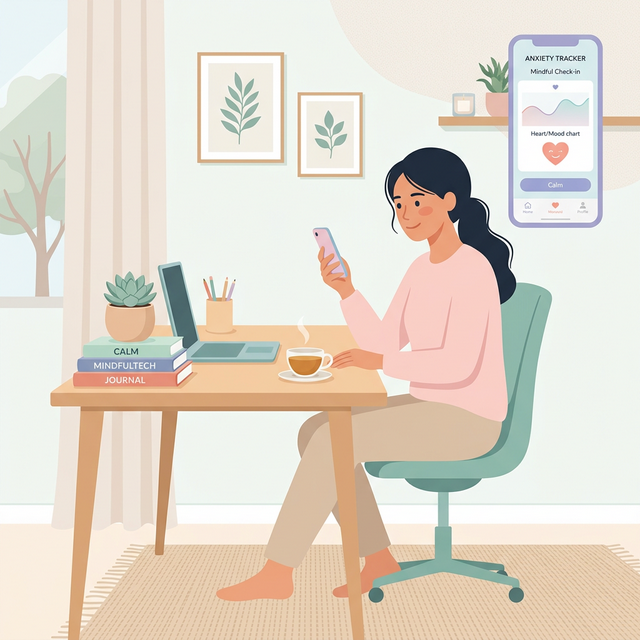
When we talk about technology and mental health, the conversation usually goes one way: screens are bad, doomscrolling is ruining our brains, and we all need a digital detox.
While there is undeniable truth to the exhausting nature of the modern attention economy, this narrative misses a crucial counterpoint. Technology itself is neutral. It's an amplifier. While it can amplify our darkest fears through an endless newsfeed, it can also amplify our self-awareness when used correctly.
The Tech-Anxiety Paradox
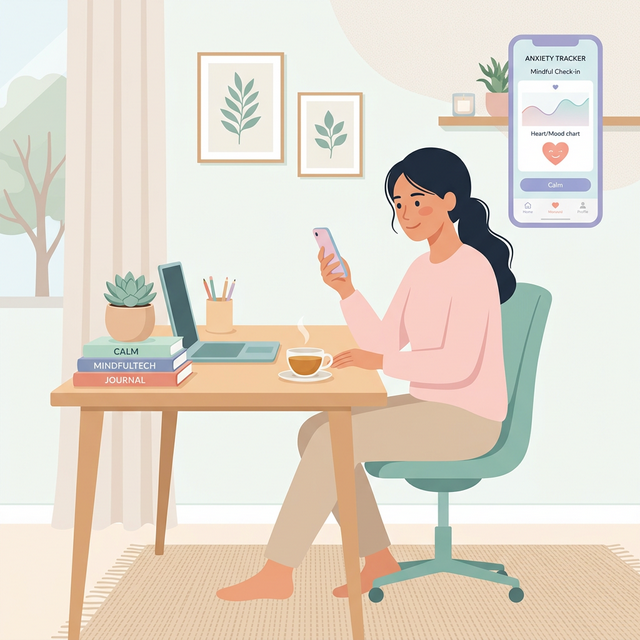
We are currently living in the "Tech-Anxiety Paradox." We use devices that fragment our attention, which spikes our cortisol, and then we use those same devices to Google "how to cure anxiety."
The problem isn't the glass rectangle in your pocket; it's the intention behind your interaction with it. Are you using technology to escape your feelings, or to understand them?
Here is how mindful technology is reshaping how we manage and overcome anxiety.
1. The Power of Pattern Recognition
Anxiety thrives in the shadows. It convinces you that your panic attacks are random, that your mood dips are unpredictable, and that you have no control.
This is where technology shines. Apps designed for tracking—like Anxiety Pulse—turn your subjective suffering into objective data. By logging your heart rate, mood, and daily activities, your phone becomes a neutral observer.
Over time, patterns emerge:
- "My resting heart rate spikes two days before a major work deadline."
- "My anxiety is consistently higher on nights I sleep less than 6 hours."
- "That afternoon 'slump' is actually a mild anxiety response to caffeine wearing off."
You cannot manage what you do not measure. Technology gives you the blueprint to your own nervous system.
2. Immediate Biofeedback
In the middle of a panic attack, your logical brain shuts down. Someone telling you to "just breathe" is often unhelpful because your body is preparing to run from a tiger.
Wearables and smartwatches provide concrete, real-time biofeedback. Watching your heart rate actively lower as you perform a Box Breathing exercise provides visual proof that you are safe and that the technique is working. This creates a positive feedback loop that helps ground you faster than thought alone.
3. Creating Friction Against Triggers
Mindful tech use isn't just about adding healthy apps; it's about altering how your device functions.
You can use built-in OS tools to protect your peace:
- Focus Modes: Segment your phone. Create a 'Work' mode that hides social media, and an 'Evening' mode that only allows calls from family.
- Grayscale: Turn your phone screen black and white. It instantly makes infinite scrolling less appealing to your dopamine receptors.
- Notification Purge: Turn off every notification that doesn't represent an actual human being trying to reach you in real-time.
4. Privacy as a Comfort
A major source of latent tech anxiety is the feeling that we are constantly being watched and monetized. This is especially true for health data.
The new wave of mindful wellness apps prioritizes local data storage. This means your most intimate mental health data lives only on your device, not on a corporate server. Knowing your diary of anxiety triggers is mathematically secure removes the secondary anxiety of data privacy, allowing you to be completely honest with your tracking.
Redefining Your Relationship with Your Phone
You don't need to throw your smartphone in the ocean to find peace. You just need to change its job description.
Instead of an entertainment center that occasionally makes calls, treat your phone as a personal health dashboard. Let it be the tool that reminds you to breathe, the secure vault for your mental health patterns, and the objective measure of your progress.
Action Step: Tonight, before you go to sleep, don't scroll. Instead, take 60 seconds to log how you felt today. Note your peak anxiety level, what you think caused it, and what helped. Over time, that simple data entry will become the most valuable thing on your device.