AnxietyPulse
Article2026-01-14

Why Local Data Storage Matters for Mental Health Apps

A
Anxiety Pulse Team
Editor

When you download a health app, you're not just installing software; you're often handing over the keys to your most private self. In the world of mental health tracking, where you might log your deepest fears, panic attacks, or daily struggles, privacy isn't just a feature—it's a fundamental right.

At AnxietyPulse, we made a radical choice: we don't want your data.

Instead of storing your information on our servers, we built AnxietyPulse as a "local-first" application. But what does that mean, and why should it matter to you?

Privacy and Data Security

The Cloud vs. Your Pocket

Most modern apps operate on a cloud-based model. When you type a note or log a mood, that data is instantly beamed to a server farm owned by the company (or a third-party provider).

While this allows for convenient syncing across devices, it introduces significant risks:

  1. Data Breaches: Centralized servers are honeypots for hackers. If a company's database is compromised, millions of users' private data can be exposed.
  2. Data Sales: Many "free" apps monetize by aggregating and selling user data to advertisers or insurance companies.
  3. Loss of Control: Once your data leaves your device, you often lose the ability to permanently delete it or know exactly who has access to it.

Why Mental Health Data is Different

Leaking a playlist or a grocery list is annoying. Leaking a log of your anxiety triggers, panic attack frequency, or journal entries about your relationships is potentially devastating.

This data is:

  • Highly Sensitive: It reveals your emotional state and vulnerabilities.
  • Permanent: Once out on the internet, it's hard to retract.
  • Valuable: Advertisers crave this data to target ads based on your emotional state.

The Local-First Advantage

"Local storage" means that the primary home for your data is right on your phone. AnxietyPulse uses an on-device database (SQLite) to store your check-ins, journal entries, and settings.

Here is why this approach is safer:

1. You Hold the Keys

Your data lives on your device. We (the developers) cannot see it, read it, or sell it because we literally don't have it. There is no "master key" on our end.

2. Zero-Knowledge Architecture

Since we don't store your personal data on our servers, a breach of our systems would yield... nothing about your mental health. There is simply nothing there to steal.

3. Immediate Access, Offline

Local apps are faster and work perfectly without an internet connection. You can log a panic attack in a subway tunnel or a remote cabin without worrying about "syncing."

But What About Backups?

A common concern with local storage is: "What if I lose my phone?"

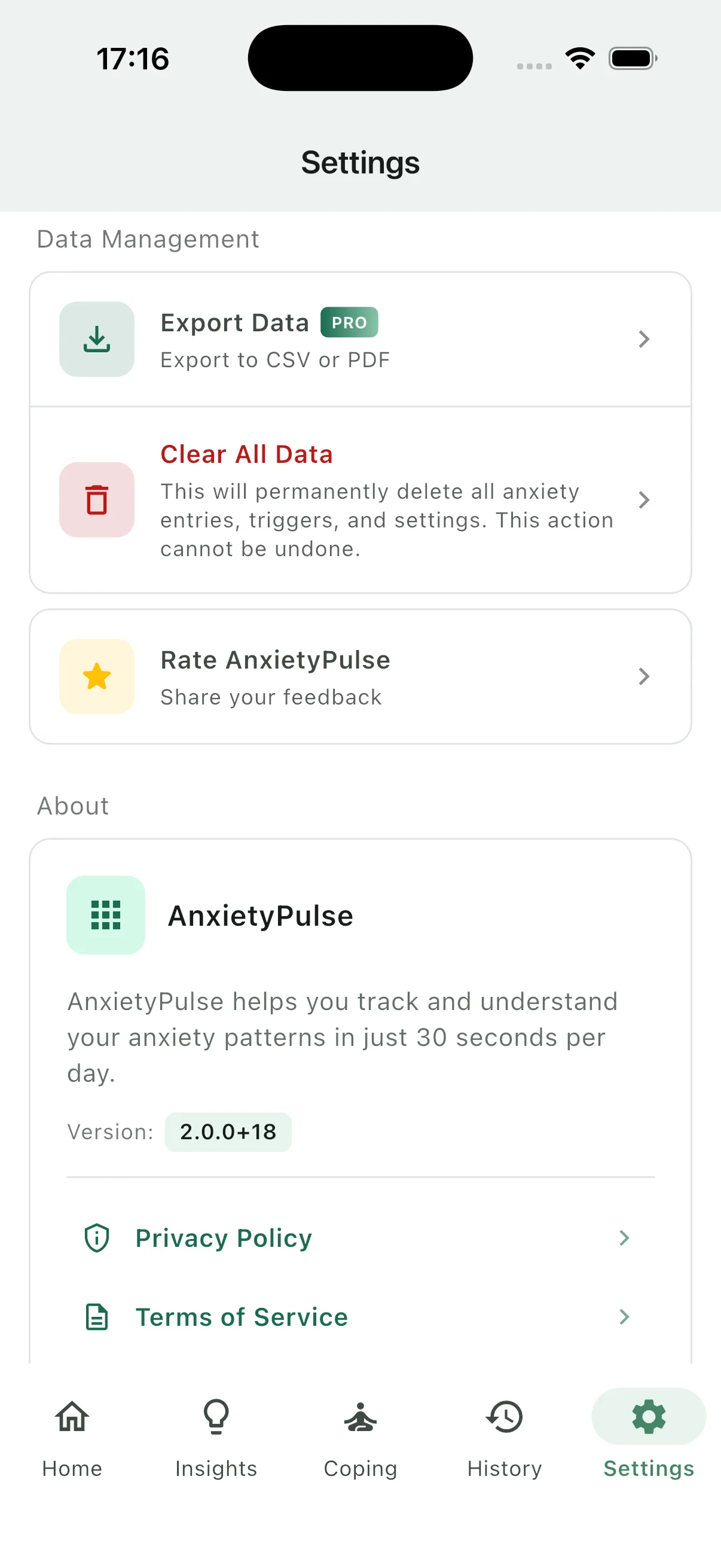
This is where user-controlled backups come in. AnxietyPulse allows you to export your data. You can save this backup to your own personal cloud storage (like iCloud or Google Drive) if you choose. The difference is that you control that cloud account, not us.

Privacy as a Feature, Not an Afterthought

We believe that a mental health tool requires a safe environment to work. You cannot be honest with yourself in your mood journal if you're worried about who else might be reading it.

This commitment to privacy is something we share with other high-quality tools in the wellness space. For example, if you are also tracking your sobriety, Sober Tracker is another excellent local-first, privacy-focused app that keeps your data where it belongs—with you.

By choosing a local-first architecture, we prioritize your peace of mind over our ability to mine data.

Summary

  • Cloud Apps: Store data on company servers; higher risk of breaches and data mining.
  • Local-First (AnxietyPulse): Stores data on your phone; you have full control and ownership.
  • Your Choice: For sensitive mental health data, local storage offers superior security and privacy.

Your journey to managing anxiety is personal. Your data should be too.


Ready to track your anxiety with complete peace of mind? Download AnxietyPulse today.