Breathing Exercises (Box Breathing) for Performance Anxiety
Breathing exercises reduce performance anxiety by lowering physiological arousal to the optimal zone for performance. The Yerkes-Dodson law demonstrates that arousal beyond a certain threshold impairs fine motor control and cognitive recall — slow breathing brings arousal back to the peak performance range without eliminating the alertness needed to perform well.
Performance Anxiety — Common Symptoms
Trembling or Shaking
Visible shaking of the hands, voice, or legs when performing in front of others, caused by adrenaline release.
Dry Mouth and Tight Throat
Difficulty swallowing or speaking clearly due to the body's stress response redirecting blood flow away from the digestive system.
Sweating and Flushing
Excessive perspiration and visible reddening of the skin, particularly on the face, neck, and palms.
Mental Blanking
Sudden inability to recall well-known material — forgetting lines, answers, or talking points mid-performance.
Catastrophic Thinking
Predicting the worst possible outcome before or during the performance — 'I'm going to fail,' 'Everyone will see I'm incompetent.'
Avoidance and Procrastination
Delaying preparation or avoiding performance situations altogether, which paradoxically increases anxiety and reduces readiness.
Breathing Exercises (Box Breathing) — Step-by-Step Guide
Find a Comfortable Position
Sit upright with your feet flat on the floor and your hands resting on your thighs. Close your eyes or soften your gaze. Let your shoulders drop away from your ears.
Inhale for 4 Seconds
Breathe in slowly through your nose for a count of four. Focus on filling your lungs from the bottom up — feel your diaphragm expand first, then your chest.
Hold for 4 Seconds
Gently hold your breath for a count of four. Keep your body relaxed — there should be no straining. This pause allows oxygen to fully saturate your bloodstream.
Exhale for 4 Seconds
Exhale slowly through your mouth for a count of four, emptying your lungs completely. Repeat the cycle for four to six rounds, or until you feel your heart rate slow.
Track Your Progress
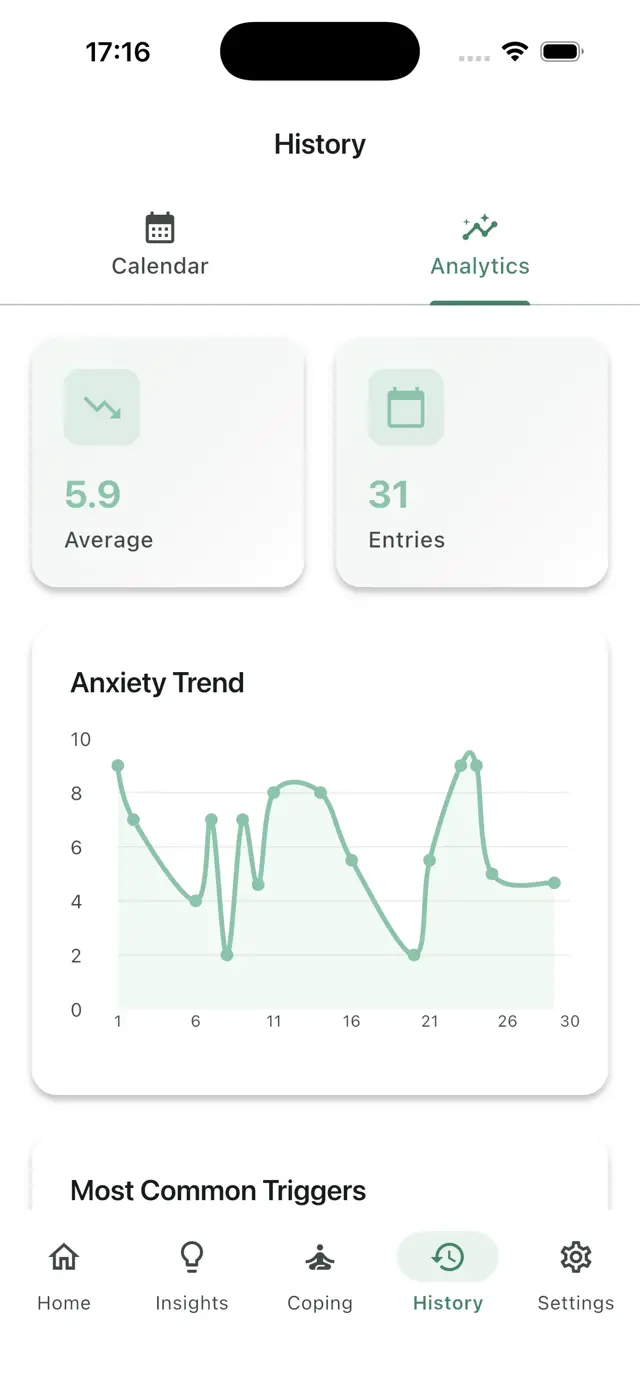
See how these techniques work for you over time with AnxietyPulse.