Anxiety has a way of hijacking your brain. One minute you’re fine, and the next, your thoughts are racing, your heart is pounding, and you feel completely detached from reality. This sensation—often called dissociation or derealization—can be terrifying.
When you’re in the grip of a panic attack or high anxiety spike, "calm down" is useless advice. You need a concrete tool to pull your brain back to the present moment.
Enter the 3-3-3 Rule.

What is the 3-3-3 Rule?
The 3-3-3 rule is a mindfulness technique designed to engage your senses and disrupt the loop of negative thoughts. It’s simple enough to remember even when you’re panicked, and subtle enough to do in public without anyone noticing.
It involves three steps: Sight, Sound, and Touch.
Step 1: Look for 3 Things You Can See
Pause and look around your immediate environment. Find three distinct objects and name them silently to yourself.
Don’t just glance at them—really look.
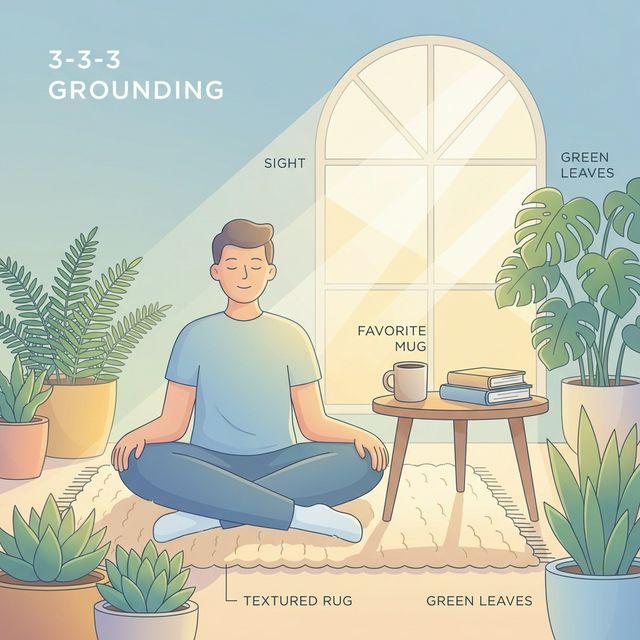
- "I see the textured pattern on the rug."
- "I see the light reflecting off the coffee mug."
- "I see the green leaves of that plant in the corner."
Why this helps: Anxiety turns your focus inward. Forcing yourself to observe external details shifts activity from your emotional brain (the amygdala) to your logical brain (the prefrontal cortex).
Step 2: Listen for 3 Sounds You Can Hear
Close your eyes if it feels safe to do so, or just soften your gaze. Tune in to the sounds around you.
Identify three specific noises:
- The hum of the refrigerator or air conditioner.
- Cars passing by on the street.
- The sound of your own breathing or keyboard tapping nearby.
Why this helps: Panic often creates a "tunnel vision" effect for your ears, where you only hear your own racing heartbeat. Expanding your auditory awareness breaks that tunnel.
Step 3: Move 3 Parts of Your Body
Finally, engage your physical sense of touch and movement.
- Wiggle your toes inside your shoes.
- Tap your fingers on your lap or a desk.
- Roll your shoulders back or turn your head side to side.
Why this helps: This reconnects you to your physical body. Anxiety often triggers a "freeze" response; voluntary movement signals to your nervous system that you are in control and not trapped.
Why It Works
The 3-3-3 rule works because it forces you to multitask in a specific way. Your brain struggles to maintain a high-alert panic state while simultaneously processing specific sensory input and coordinating motor movements. By diverting mental energy to these tasks, you naturally dial down the intensity of the anxiety.
When to Use It
Because it’s so discreet, the 3-3-3 rule is perfect for:
- Before a presentation or meeting: When nervousness peaks.
- In crowded spaces: If you feel claustrophobic or overstimulated.
- While driving: If you feel a wave of panic (keep your eyes open, obviously!).
- Waking up anxious: To snap out of morning dread.
Track Your Triggers
The 3-3-3 rule is an excellent "fire extinguisher" for the moment of panic. But to prevent future fires, it helps to know what started them.
After you’ve used this technique to calm down, take a moment to log the episode in Anxiety Pulse. Recording what happened right before the anxiety spike—whether it was caffeine, a stressful email, or lack of sleep—can help you identify patterns and stop the loop before it starts.