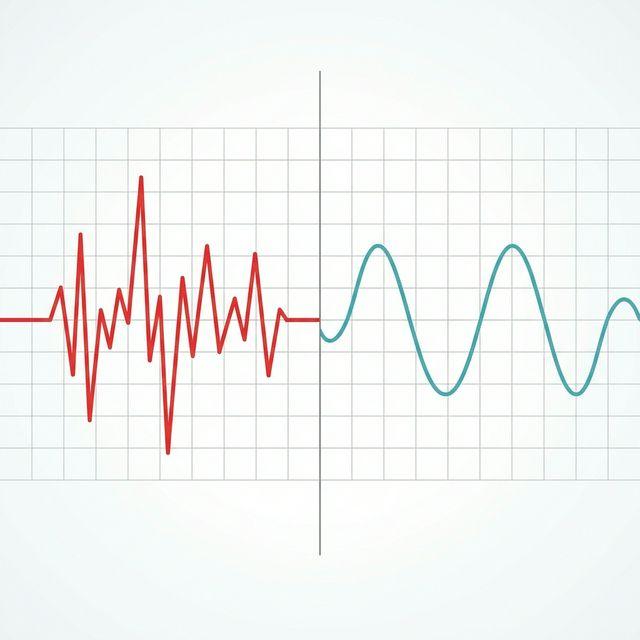
You might think a steady heart rate is the goal of health, like a metronome ticking perfectly to time. But when it comes to mental resilience, your heart shouldn't beat like a clock. It should dance.
This "dance" is called Heart Rate Variability (HRV), and it's one of the most powerful biomarkers we have for understanding anxiety, stress, and your body's readiness to handle the day.
If you've ever felt "wired but tired" or unable to calm down after a stressful event, your HRV might hold the answer.
What is Heart Rate Variability (HRV)?
Simply put, HRV is the variation in time (milliseconds) between consecutive heartbeats.
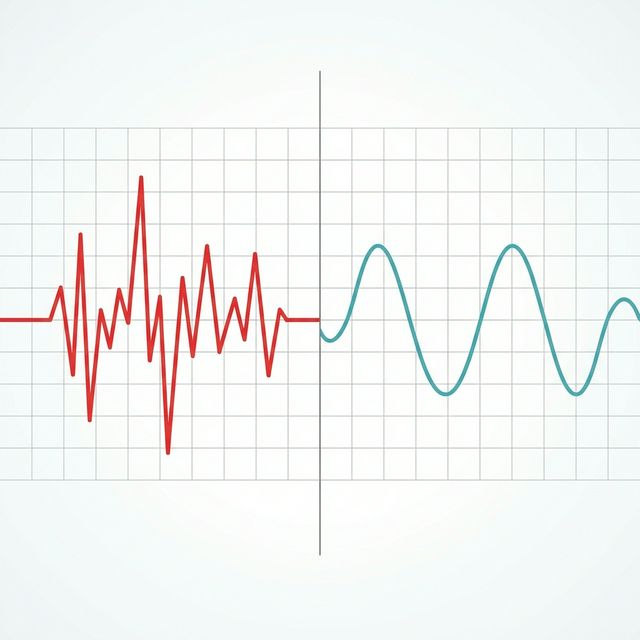
- Low HRV: Your heart beats like a metronome (e.g., exactly every 0.8 seconds). This usually means your body is in "fight or flight" mode (sympathetic nervous system dominance).
- High HRV: Your heart beats with subtle irregularities (e.g., 0.8s, then 0.9s, then 0.75s). This indicates your body is relaxed, recovering, and adaptable (parasympathetic nervous system dominance).
Think of your nervous system like a car:
- Sympathetic (Stress/Action): The gas pedal.
- Parasympathetic (Rest/Digest): The brake pedal.
A high HRV means you have great brakes—you can slow down and relax quickly after a stressful event. A low HRV often means the gas pedal is stuck seamlessly to the floor, even when you're sitting on the couch.
The Anxiety Connection
Research has consistently shown a strong link between low HRV and anxiety disorders. When you live with chronic anxiety, your body stays in a state of hyper-arousal. Your "gas pedal" is constantly engaged, reducing the natural variability in your heart rate.
This creates a feedback loop:
- Anxiety triggers stress response.
- Stress lowers HRV.
- Low HRV reduces your ability to regulate emotions.
- Poor emotional regulation fuels more anxiety.
Monitoring your HRV can give you an objective "check engine" light for your mental health. It can tell you when a panic attack might be brewing or when you need to prioritize rest before you feel the burnout.
Measuring Your HRV
You don't need a medical lab to track this anymore. Most modern wearables (Apple Watch, Oura, Whoop, Fitbit) track HRV automatically, usually while you sleep.
Important Note: Don't compare your raw number to your friend's. HRV is highly individual and decreases with age.
- 20s: Average 55-105 ms
- 40s: Average 35-75 ms
- 60s: Average 25-55 ms
Instead of comparing with others, look at your own trends. Is your average dropping this week compared to last month? That's your body whispering (or screaming) that it's under load.
Apps like Anxiety Pulse can help you correlate these physiological drops with your mood and triggers, giving you the full picture of your mental landscape.
4 Ways to Improve Your HRV (and Lower Anxiety)
The good news? You can train your HRV. Just like lifting weights strengthens muscles, specific practices strengthen your vagus nerve—the main highway of your parasympathetic nervous system.
1. Resonance Frequency Breathing
This isn't just "taking a deep breath." It's breathing at a specific rate (usually around 6 breaths per minute) that synchronizes your heart rate with your breath.
- Try it: Inhale for 4 seconds, exhale for 6 seconds.
- Why: This extends the exhalation, directly stimulating the vagus nerve and signaling your brain to slow down.
(Read more in our Box Breathing Guide)
2. Cold Exposure
Short bursts of cold stress train your nervous system to recover. A 30-second cold shower at the end of your routine forces your body to calm itself down rapidly after the shock, boosting HRV over time.
3. Prioritize Sleep Consistency
HRV is repaired during deep sleep. Going to bed and waking up at the same time every day regulates your circadian rhythm, which is directly tied to your autonomic nervous system.
4. Low-Intensity Aerobic Exercise
While HIIT is great, Zone 2 cardio (steady, easy effort where you can still hold a conversation) mimics the "high HRV" state—active but not stressed. It builds a massive aerobic base that supports heart health and stress resilience.
The Bottom Line
Your HRV is a window into your nervous system's flexibility. If it's consistently low, don't panic—that's just feedback. It's an invitation to take your foot off the gas and tend to your brakes.
By tracking your HRV and using tools like breathwork and sleep hygiene to improve it, you're not just changing a number on a watch. You're physically retraining your body's ability to handle stress, making you more resilient in the face of anxiety.