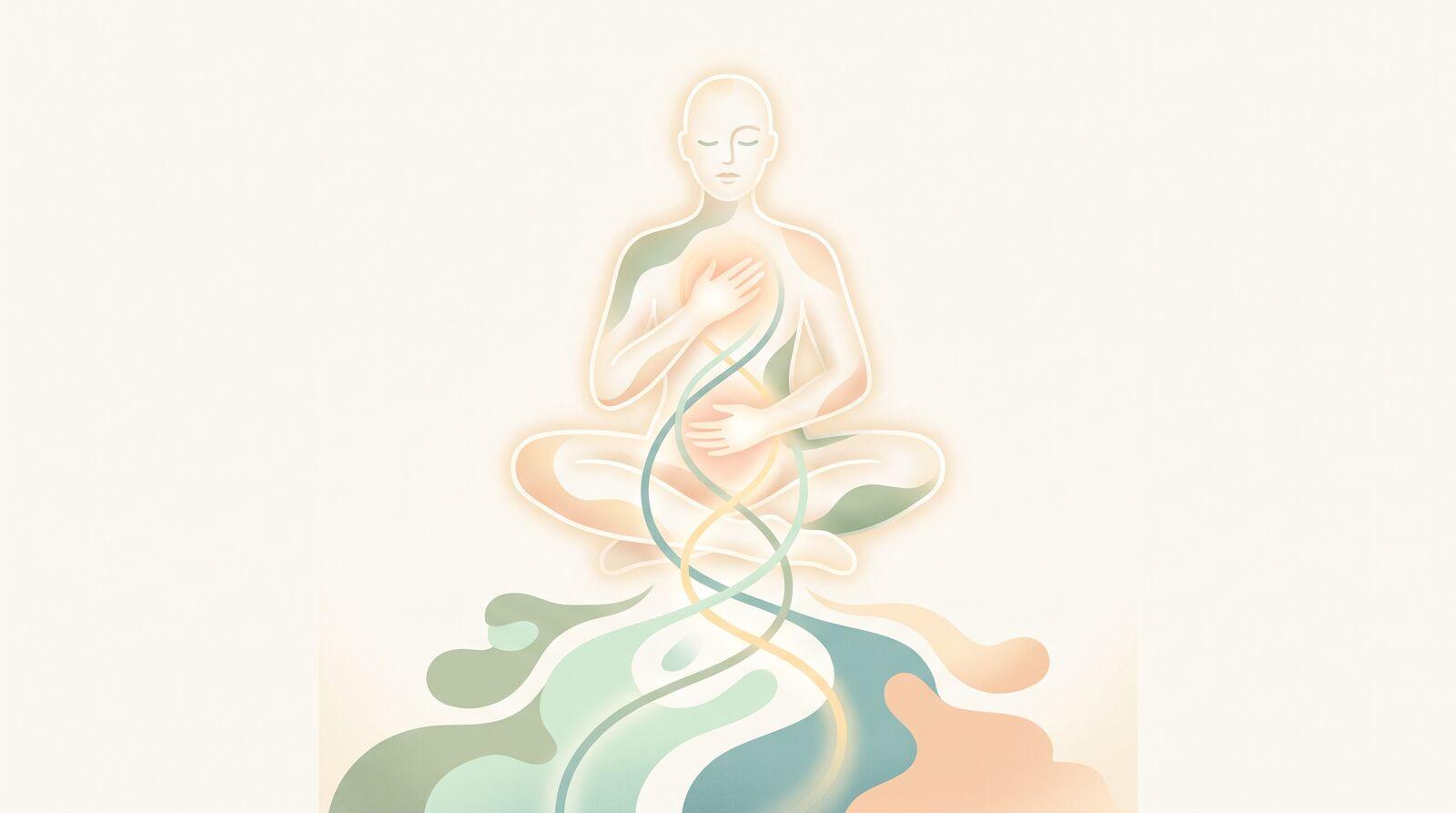
Probablemente te has dado cuenta de que no siempre puedes razonar para salir de la ansiedad. Puedes decirte que no hay nada que temer, enumerar todas las razones por las que estás a salvo, discutir con la preocupación punto por punto, y aun así sentir el pecho tenso, los hombros bloqueados y el corazón acelerado. La lógica encaja, pero el cuerpo no la cree.
Ese vacío es justo donde entran los ejercicios somáticos. En lugar de intentar calmar el sistema nervioso desde arriba, trabajan desde abajo hacia arriba: cambian lo que hace tu cuerpo y dejan que un cuerpo más tranquilo envíe la señal de "estás a salvo" que discutir nunca logró. Es uno de los enfoques que más crece en el bienestar mental ahora mismo, y con razón. Cuando la ansiedad lleva las riendas, el camino más corto de regreso a la calma suele pasar por el cuerpo, no por la mente.
Qué son los ejercicios somáticos
"Somático" simplemente significa "del cuerpo". Un ejercicio somático es cualquier práctica física suave y deliberada realizada con la atención dirigida hacia dentro, hacia las sensaciones que ocurren en tu interior, en lugar de hacia una meta como la forma física o el rendimiento. El objetivo no es quemar calorías ni estirar más. El objetivo es notar dónde tu cuerpo retiene tensión, miedo o rigidez, y darle una señal física de que la amenaza ha pasado.
Esto es lo que se entiende por regulación "de abajo hacia arriba". Los enfoques tradicionales basados en la palabra trabajan de arriba hacia abajo: parten de tus pensamientos e intentan cambiar cómo te sientes. El trabajo somático va en la dirección contraria. Empieza por el cuerpo, calma la fisiología y deja que tus pensamientos se asienten como consecuencia. Ambos tienen su lugar, pero cuando ya estás ansioso, el cerebro pensante es justo la parte que se ha desconectado, así que encontrarse con la ansiedad en el cuerpo suele ser la ruta más directa.
Por qué trabajar con el cuerpo calma la ansiedad más rápido que razonar
La ansiedad no es en realidad un problema de pensamiento. Es un problema de lucha o huida. Cuando tu cerebro percibe una amenaza, real o imaginaria, activa el sistema nervioso simpático: la frecuencia cardíaca sube, los músculos se tensan, la respiración se vuelve superficial y alta en el pecho, la digestión se detiene. Todo esto ocurre de forma automática, por debajo del nivel del pensamiento consciente, y por eso no puedes simplemente decidir que se detenga.
Los ejercicios somáticos alcanzan ese sistema automático directamente. Una exhalación larga, una sacudida suave, una mirada lenta que recorre la habitación: cada una de estas envía un mensaje físico al cerebro de que el entorno es seguro, lo que cambia el interruptor del modo simpático de "peligro" al modo parasimpático de "descanso y recuperación". Gran parte de esto lo transporta el nervio vago, la autopista principal de la rama calmante de tu sistema nervioso, que tratamos en profundidad en nuestra guía sobre la estimulación del nervio vago.
Hay una segunda razón por la que estas prácticas funcionan: la interocepción, tu sentido de lo que ocurre dentro de tu cuerpo. La ansiedad secuestra la interocepción, haciéndote hiperconsciente de cada latido acelerado y cada respiración tensa, e interpretándolo todo como peligro. Los ejercicios somáticos reeducan ese sentido. Al notar deliberadamente las sensaciones corporales desde una postura tranquila y curiosa, le enseñas a tu cerebro que un corazón acelerado no es automáticamente una emergencia, lo que afloja el control de la ansiedad con el tiempo.
Ejercicios somáticos que puedes probar ahora mismo
Ninguno de estos requiere equipo, y la mayoría se pueden hacer en un par de minutos estés donde estés. Pruébalos de uno en uno y nota cuáles mueven realmente algo en ti. Los cuerpos son distintos, y el ejercicio que calma a una persona puede no significar nada para otra.
1. Oriéntate hacia la habitación. Cuando la ansiedad estrecha tu foco hacia la amenaza dentro de tu cabeza, gira lentamente la cabeza y deja que tus ojos recorran el espacio en el que estás. Nombra de verdad lo que ves: la ventana, el color de la pared, una planta, la puerta. Esto le dice a una parte primitiva de tu cerebro que estás mirando alrededor con libertad, algo que ningún animal en peligro real haría, y señala seguridad. Deja que tu mirada descanse en cualquier cosa que se sienta agradable o neutra.
2. Alarga tu exhalación. El interruptor somático de apagado más fiable es una exhalación larga y lenta, porque activa directamente el sistema parasimpático. Inhala suavemente por la nariz durante unos cuatro tiempos, y luego exhala despacio durante seis u ocho. O prueba el suspiro fisiológico: dos inhalaciones cortas por la nariz, y después una exhalación larga por la boca, que desglosamos en nuestra guía sobre el suspiro cíclico. Si mantener un ritmo mientras estás ansioso te resulta imposible, un marcador visual como Flow Breath lleva el tiempo por ti para que solo tengas que seguirlo.
3. Sacúdelo. Los animales en la naturaleza literalmente tiemblan y se sacuden después de que pasa una amenaza, descargando la oleada de energía del estrés para que no se quede atascada. Tú puedes tomar esto prestado. Ponte de pie y rebota suavemente sobre tus pies, sacude las manos y los brazos, deja que todo tu cuerpo tiemble sin tensión durante treinta segundos o un minuto. Se siente un poco ridículo, y eso es parte de por qué funciona: es difícil seguir tenso mientras te aflojas a propósito.
4. Usa la presión de anclaje. Presiona ambos pies con firmeza contra el suelo y nota el apoyo sólido debajo de ti. O coloca una mano plana sobre el pecho y otra sobre el vientre y siente el calor y el peso. El autocontacto y la presión constante son señales calmantes que tu sistema nervioso entiende sin una sola palabra. A algunas personas les gusta el "abrazo mariposa": cruzar los brazos y dar toques lentos y alternos en los hombros.
5. Tararea, suspira o haz un sonido grave de "vuu". El nervio vago está conectado a tus cuerdas vocales, así que un tarareo lento o un sonido grave y resonante en la exhalación lo estimula con suavidad. Tararear unos compases de cualquier cosa, suspirar de forma audible o alargar un grave "vuu" durante lo que dura una respiración puede asentar sorprendentemente rápido un sistema alterado.
6. Tensa y suelta. La ansiedad carga tensión en el cuerpo, así que tensar deliberadamente un grupo muscular con fuerza durante unos segundos y luego soltarlo le enseña a tu cuerpo la diferencia sentida entre estar apretado y estar relajado. Este es el núcleo de la relajación muscular progresiva, que recorre todo el cuerpo a través de la secuencia y funciona especialmente bien antes de dormir.
Construir una práctica, no solo un kit de rescate
Es tentador tratar estos ejercicios como herramientas de emergencia a las que recurres solo en plena espiral. Sí ayudan en el momento, pero su verdadero poder aparece cuando los practicas mientras estás en calma. Un sistema nervioso que ha ensayado repetidamente el paso al modo de "descanso y recuperación" lo hace mejor y más rápido, lo que eleva tu línea base y hace menos probable que la ansiedad se instale desde el principio.
No necesitas una hora. Dos o tres minutos de exhalaciones alargadas por la mañana, una sacudida después de una llamada estresante, unas cuantas rondas de tarareo antes de dormir. La constancia importa mucho más que la duración. Piénsalo como pensarías en desarrollar cualquier capacidad física: pequeñas repeticiones regulares superan a una sesión maratónica ocasional. A lo largo de unas semanas, las prácticas a las que vuelves se convierten en un reflejo que tu cuerpo busca por sí solo.
Cómo el registro te muestra lo que de verdad funciona
Aquí está la complicación honesta: no todos los ejercicios somáticos funcionan para todas las personas, y es genuinamente difícil saber de memoria cuáles están ayudando. Después de una semana dura, casi nadie puede reconstruir con exactitud si fueron las sacudidas, el tarareo o las exhalaciones largas lo que marcó la diferencia, o si sus días más tranquilos simplemente coincidieron con dormir mejor.
Aquí es donde un poco de registro se gana su lugar. Al anotar tus niveles de ansiedad en AnxietyPulse junto con las prácticas que usaste, más los sospechosos habituales como el sueño, la cafeína y el estrés, construyes un registro que la memoria no puede. A lo largo de unas semanas, salen a la luz patrones que día a día eran invisibles: quizá orientarte y las exhalaciones largas bajen de forma fiable tu ansiedad nocturna, mientras que las sacudidas hacen poco por ti, o quizá tu práctica somática solo se sostiene cuando además duermes bien. Una vez que puedes ver qué mueve de verdad la aguja para tu cuerpo, puedes dejar de adivinar y apoyarte en el puñado de ejercicios que realmente funcionan para ti.
Cuándo buscar apoyo adicional
Los ejercicios somáticos son una herramienta poderosa de autoayuda, y para el trauma en particular existen enfoques estructurados y basados en la evidencia como Somatic Experiencing que van mucho más profundo que cualquier cosa que puedas hacer solo. Si tu ansiedad es frecuente, si está encogiendo el tamaño de tu vida, o si el trabajo corporal saca a la superficie sensaciones o recuerdos abrumadores, esa es una señal para trabajar con un profesional en lugar de forzar por tu cuenta. Un terapeuta con formación en trauma puede guiar el trabajo somático de forma segura y ajustar su ritmo a lo que tu sistema nervioso puede manejar. Pedir ayuda no es un fracaso de la práctica; es la práctica hecha como corresponde.
La conclusión
No siempre puedes razonar tu camino hacia la calma, porque la ansiedad no vive solo en tu razonamiento. Vive en un cuerpo tenso, con la respiración contenida, en modo lucha o huida, y la forma más rápida de llegar a ese cuerpo es a través del cuerpo mismo. Oriéntate hacia la habitación, alarga tu exhalación, sacude el estrés, ánclate a través de tus pies, tararea, tensa y suelta. Practícalos cuando estás en calma para que estén ahí cuando no lo estás, y registra cuáles funcionan de verdad para ti, para que tu esfuerzo vaya adonde cuenta. Tu sistema nervioso se tensó sin pedir permiso, y con las señales físicas adecuadas, sabe exactamente cómo soltar.
Este artículo es solo para fines informativos y no sustituye el consejo médico profesional. Si la ansiedad está interfiriendo en tu vida diaria, o si las prácticas corporales sacan a la superficie recuerdos o sensaciones angustiantes, consulta a un profesional de la salud cualificado.