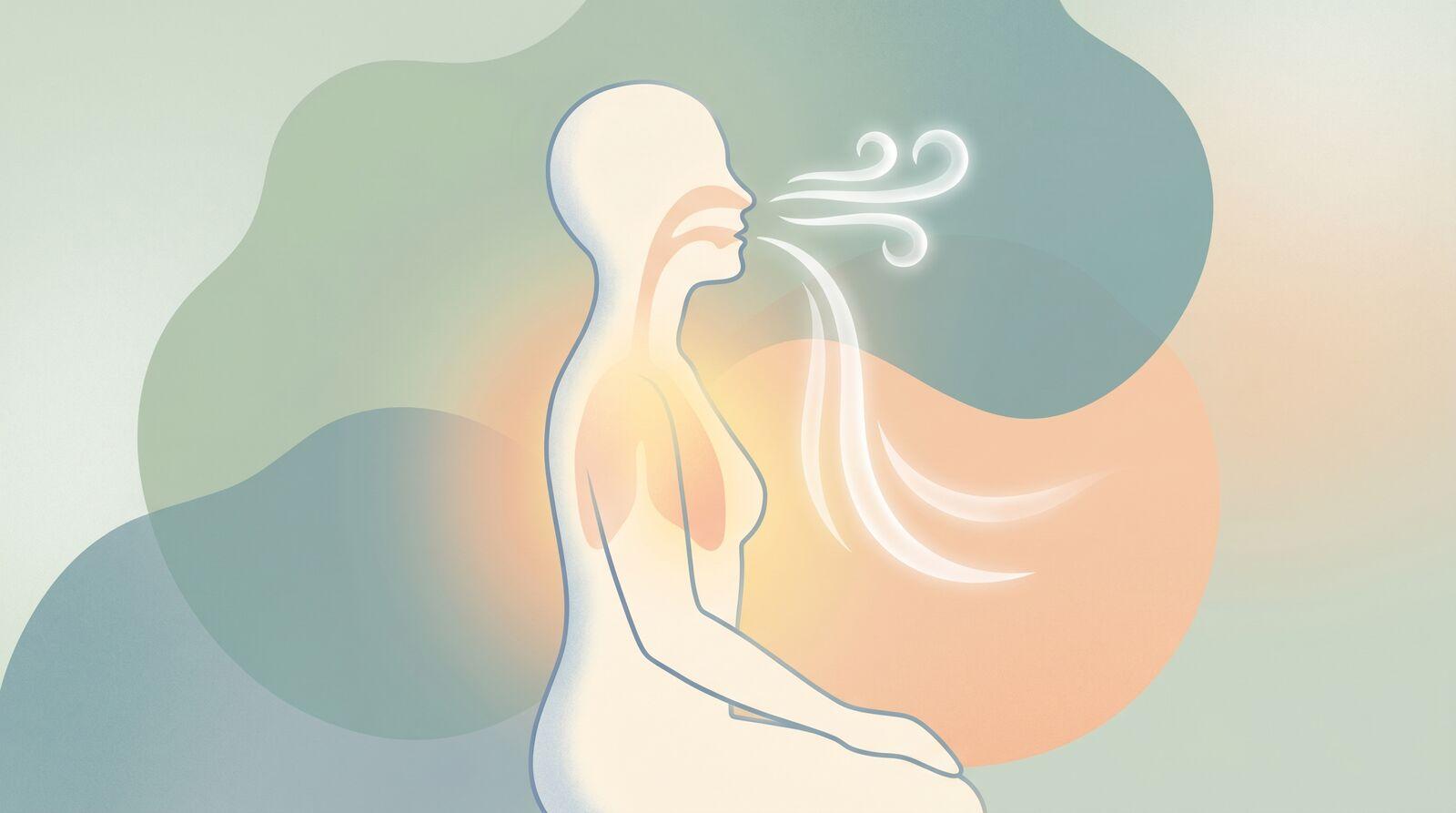
You already know this technique. You have used it your whole life without ever deciding to. Watch a child who has been crying hard: just before they settle, they take a quick double breath, two sharp inhales back to back, followed by a long, shuddering exhale. That pattern is not random. It is the nervous system's built-in reset switch, and your body deploys it automatically when stress peaks.
Neuroscientists call it the physiological sigh, and in the last few years it has gone from an obscure piece of respiratory physiology to the single most-recommended rapid calming technique in the field. The reason is simple: when Stanford researchers put it head to head against box breathing and mindfulness meditation, the sigh won.
Here is what the physiological sigh actually is, the mechanism that makes it work faster than other breathing techniques, what the research found, and exactly how to use it, both as a 30-second emergency brake and as a five-minute daily practice.
What Is the Physiological Sigh?
The physiological sigh is a specific breathing pattern:
- Inhale through your nose until your lungs feel comfortably full
- Inhale again, a second short, sharp sip of air on top of the first, topping the lungs all the way up
- Exhale slowly and completely through your mouth, letting the breath out until your lungs are empty
That is the entire technique. One double inhale, one long exhale. Done once or twice, it takes under thirty seconds. Done repeatedly for five minutes, it becomes a practice called cyclic sighing.
The pattern was first described by physiologists in the 1930s, who noticed that humans and animals spontaneously produce these double-intake sighs every few minutes, around the clock, without noticing. People sigh more under stress, before difficult tasks, and in states of relief. The sigh is not a sign of boredom or exasperation; it is respiratory maintenance the body runs on a schedule, and it can be hijacked deliberately.
Unlike box breathing, which uses a strict four-count rhythm to build steady focus, or the 4-7-8 technique, which leans on a long breath hold, the physiological sigh requires no counting, no holds, and no practice period before it starts working. That makes it uniquely suited to the moments when anxiety has already spiked and following a count feels impossible.
Why the Double Inhale Matters
The strange-looking second inhale is the heart of the technique, and it solves a specific mechanical problem.
Your lungs contain roughly 500 million tiny air sacs called alveoli, where oxygen enters the blood and carbon dioxide leaves it. Under stress, breathing becomes fast and shallow, and a portion of these sacs progressively collapse and stick shut, like tiny deflated balloons. Collapsed alveoli cannot exchange gas. As they drop offline, carbon dioxide builds up in the bloodstream, and rising CO2 is one of the most direct chemical triggers of the anxious, air-hungry, on-edge feeling. Shallow breathing causes the feeling that causes more shallow breathing.
The second inhale fixes this mechanically. The first breath fills the lungs; the second, stacked on top at higher pressure, pops the collapsed alveoli back open. With the full surface area back online, the long exhale that follows offloads the accumulated carbon dioxide in one efficient stroke.
The long exhale then adds the second mechanism, the same one that powers every effective calming breath: exhaling slows the heart. When you breathe out, the heart receives a direct signal through the vagus nerve to reduce its rate; when you breathe in, the opposite happens. A breath pattern weighted heavily toward exhalation, as the sigh is, shifts the whole autonomic balance toward the parasympathetic, rest-and-digest side within a few breath cycles. For the full picture of how this pathway works, see our guide to vagus nerve stimulation.
So one sigh does two jobs at once: it restores the lungs' gas-exchange capacity and it pumps the brake on heart rate. That dual action is why the effect is felt in seconds rather than minutes.
What the Stanford Study Found
For years the physiological sigh was promoted on mechanism alone. Then in 2023, researchers at Stanford Medicine, including neurobiologist Andrew Huberman and psychiatrist David Spiegel, ran the comparison study the field was waiting for, published in Cell Reports Medicine.
They assigned over a hundred participants to one month of daily five-minute practice in one of four conditions: cyclic sighing, box breathing, cyclic hyperventilation with retention, or mindfulness meditation. Participants logged mood, anxiety, and physiological measures daily.
All four groups improved. But cyclic sighing produced the largest gains in positive mood and the biggest drop in resting respiratory rate, a physiological marker of reduced arousal, outperforming meditation and both other breathing protocols. The effect also compounded: the more consecutive days participants practiced, the stronger the daily benefit became.
Two details from the study are worth holding onto. First, the breathing techniques beat passive meditation for fast mood improvement, suggesting that actively steering the breath does something watching the breath does not. Second, five minutes was enough. The protocol that won was not a forty-minute discipline; it was shorter than a coffee break.
One honest caveat: this is a single randomized study with around 30 participants per arm, and self-reported mood is a soft endpoint. The mechanistic evidence behind the sigh is decades old and solid, but the comparative superiority finding is young. Treat it as the best current answer, not settled law.
How to Do It
There are two ways to use the physiological sigh, and they serve different purposes.
The Emergency Version: One to Three Sighs
This is for acute moments: the spike before a difficult conversation, the surge when an email lands badly, the first minutes of a panic wave.
- Inhale through your nose until your lungs feel full
- Without exhaling, take one more short, sharp inhale through the nose, filling the last pocket of space
- Exhale slowly through your mouth, twice as long as the inhales combined, until your lungs are genuinely empty
- Repeat once or twice more if needed
Most people feel a perceptible drop in arousal after one to three sighs. Your shoulders lower, the air hunger eases, and the racing-heart feeling softens. It will not erase a panic attack, but it reliably takes the peak off, which is often enough to re-engage the thinking brain.
The Practice Version: Five Minutes of Cyclic Sighing
This is the protocol from the Stanford study, used as daily training rather than emergency response.
- Sit or lie somewhere comfortable and set a five-minute timer
- Breathe in the sigh pattern continuously: double inhale through the nose, long slow exhale through the mouth
- Keep the pace unhurried; there are no counts to hit, just full inhales and complete, leisurely exhales
- If your mind wanders, that is fine. This is not meditation. The breath does the work whether or not your attention stays on it
Done daily, this is where the cumulative mood and baseline-arousal benefits show up. Many people anchor it to an existing routine: after waking, before lunch, or as a buffer between work and evening.
When to Use It
Acute anxiety spikes: The sigh's biggest advantage over other techniques is speed and simplicity under pressure. When you are too activated to count a 4-7-8 cycle, you can still manage two inhales and a long exhale.
Before stressful events: Two or three sighs in the minutes before an interview, presentation, or difficult call lowers heart rate without making you sleepy. Pair it with a grounding technique if your thoughts are also racing.
Physical anxiety symptoms: Air hunger, chest tightness, and the dizzy, tingly cluster that comes from over-breathing respond directly, because the sigh corrects the CO2 imbalance producing them. Our guide to the physical symptoms of anxiety explains that chemistry in detail.
As a daily baseline: Five minutes of cyclic sighing as a standing practice, per the Stanford protocol. This is the version with evidence for lasting mood improvement and lower resting arousal, and it pairs naturally with tracking your HRV if you wear a device that measures it.
Common Mistakes
1. Skipping the Second Inhale
Under stress, people compress the technique into one big breath and a sigh. The second inhale is the mechanism; without it, the collapsed alveoli stay collapsed and you are just taking a deep breath, which is fine but measurably weaker.
2. Rushing the Exhale
The exhale should be slow and run all the way to empty. A quick puff discards the heart-slowing vagal effect, which lives almost entirely in the exhalation phase. As a rule of thumb, the exhale should last at least as long as both inhales combined, ideally longer.
3. Forcing Huge Inhales
The second sip of air is small. If you haul in two maximal breaths, you will feel strained and dizzy rather than calm. The first inhale is comfortable, the second just tops it off.
4. Treating One Sigh as a Failed Cure
One sigh takes the edge off; it does not switch anxiety off like a light. If you are highly activated, expect to repeat it two or three times, and judge the effect over a minute, not a second.
5. Only Using It in Crisis
The Stanford results came from daily practice, not occasional rescue use. The emergency version works cold, but the larger gains, better baseline mood and a slower resting breath rate, belong to the people who run the five-minute protocol consistently.
Tracking Whether It Works for You
The Stanford study reported averages; whether the sigh outperforms box breathing or 4-7-8 for you is an empirical question only your own data can answer.
With AnxietyPulse, log your anxiety level immediately before and after using the technique, and tag the context: pre-meeting, mid-spike, daily practice. After two weeks you will have a real answer to three questions: does it lower your in-the-moment ratings, does the daily protocol shift your baseline, and does it work better or worse than the other techniques you have logged. People differ here more than the headlines suggest; some respond most to the sigh, others to longer protocols like 4-7-8 breathing. Measured against your own numbers, the question stops being a debate and becomes a result.
A Note on Safety
The physiological sigh involves no breath holds and no hyperventilation, which makes it one of the safest breathing techniques available, including during pregnancy. Two cautions still apply: if you feel lightheaded, you are likely forcing the inhales, so soften them; and if you have a significant respiratory condition such as severe asthma or COPD, check with your doctor before adopting any deliberate breathing protocol.
The Reset Switch You Were Born With
The physiological sigh needs no app, no counting, no quiet room, and no belief that it will work. It is the calming reflex your own nervous system already runs every few minutes, borrowed on purpose at the moment you need it: two inhales to reopen the lungs, one long exhale to slow the heart.
Try it now, once, and notice the half-step down in arousal. Then give the five-minute version two weeks alongside your tracking data and let the numbers tell you what it does for your baseline. Of all the techniques in the anxiety toolkit, this is the cheapest experiment you will ever run.
This article is for informational purposes only and is not a substitute for professional medical advice. If you're experiencing severe anxiety, please consult with a healthcare provider.