Therapeutic Journaling for Social Anxiety Disorder
Journaling for social anxiety targets post-event rumination — the hours spent replaying conversations and analyzing perceived mistakes. By writing down what actually happened in a social situation versus what you feared would happen, you build a factual record that challenges the negatively biased memories your anxious mind constructs.
Social Anxiety Disorder — Common Symptoms
Blushing and Sweating
Visible physical reactions such as flushing of the face, excessive sweating, or trembling when in social situations.
Rapid Heartbeat
Noticeable increase in heart rate when anticipating or entering social interactions, sometimes accompanied by chest tightness.
Nausea or Stomach Distress
Gastrointestinal discomfort including nausea, stomach cramps, or the urge to use the restroom before social events.
Fear of Judgment
Persistent worry that others are evaluating you negatively, noticing your mistakes, or thinking poorly of you.
Avoidance Behavior
Deliberately avoiding social situations, turning down invitations, or enduring events with extreme distress.
Post-Event Rumination
Replaying social interactions for hours or days afterward, analyzing perceived mistakes and imagining negative judgments.
Therapeutic Journaling — Step-by-Step Guide
Set a Consistent Time
Choose a regular time each day — morning to set intentions or evening to process the day. Set a timer for 15 to 20 minutes. Consistency matters more than duration; even 5 minutes daily outperforms sporadic longer sessions.
Write Freely Without Editing
Write continuously without worrying about grammar, spelling, or structure. The goal is to transfer anxious thoughts from your mind to paper. If you get stuck, write 'I don't know what to write' until something comes. Do not censor yourself.
Identify Patterns and Triggers
After a week of entries, review what you have written. Look for recurring themes, situations, or people that appear alongside your anxiety. Circle or highlight repeating words and phrases. These patterns reveal your personal triggers.
Reflect and Reframe
Write a brief reflection at the end of each session. Ask yourself: 'What would I tell a friend in this situation?' or 'How likely is the outcome I'm worried about?' This bridges journaling with cognitive restructuring.
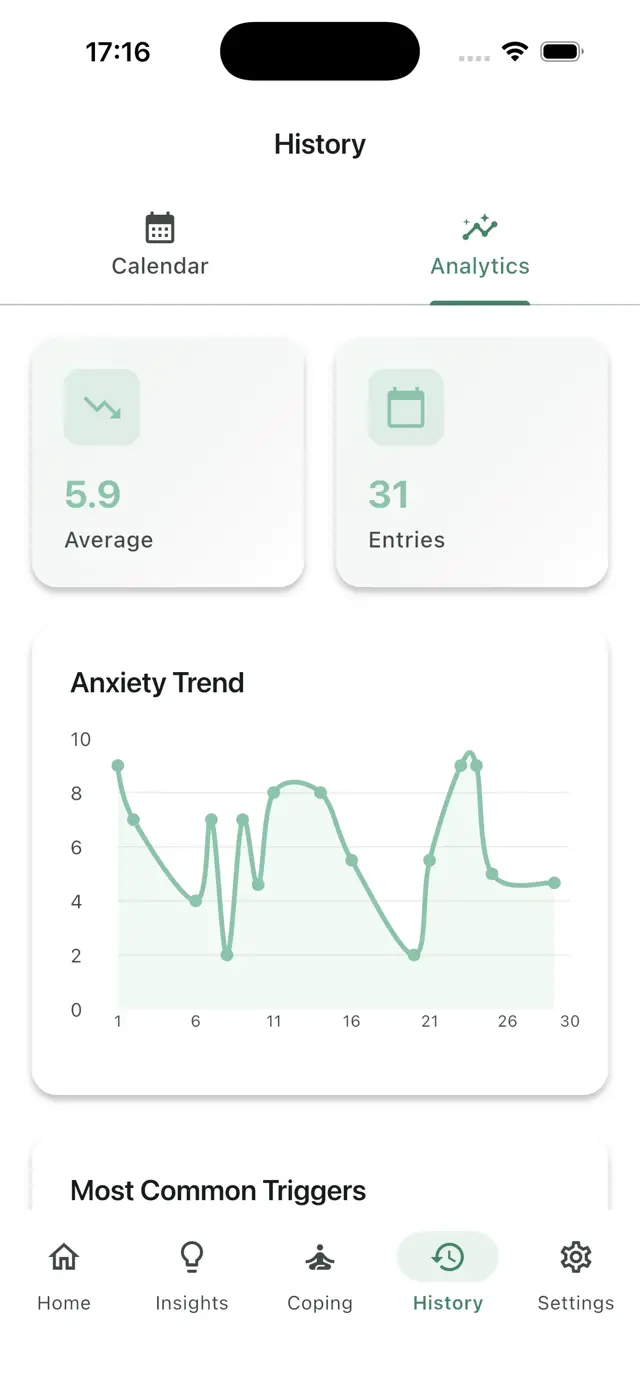
Track Your Progress
See how these techniques work for you over time with AnxietyPulse.
Frequently Asked Questions
Related Articles
Nighttime Anxiety: Why It Happens and How to Calm Your Mind Before Bed
Do you feel fine all day, only for your anxiety to spike the moment your head hits the pillow? Here is why nighttime anxiety happens and how to stop racing thoughts.
Social Media & Anxiety: The Scroll That Never Ends
Is your feed fueling your anxiety? Discover why the infinite scroll triggers stress and how to reclaim your peace without deleting every app.