Grounding Exercises (5-4-3-2-1 Technique) for Social Anxiety Disorder
Grounding exercises redirect the intense self-focused attention that characterizes social anxiety — the constant monitoring of how you look, sound, and are perceived — toward the external environment. By deliberately engaging your senses with the physical world, you break the internal spotlight effect that makes social situations feel unbearably scrutinized.
Social Anxiety Disorder — Common Symptoms
Blushing and Sweating
Visible physical reactions such as flushing of the face, excessive sweating, or trembling when in social situations.
Rapid Heartbeat
Noticeable increase in heart rate when anticipating or entering social interactions, sometimes accompanied by chest tightness.
Nausea or Stomach Distress
Gastrointestinal discomfort including nausea, stomach cramps, or the urge to use the restroom before social events.
Fear of Judgment
Persistent worry that others are evaluating you negatively, noticing your mistakes, or thinking poorly of you.
Avoidance Behavior
Deliberately avoiding social situations, turning down invitations, or enduring events with extreme distress.
Post-Event Rumination
Replaying social interactions for hours or days afterward, analyzing perceived mistakes and imagining negative judgments.
Grounding Exercises (5-4-3-2-1 Technique) — Step-by-Step Guide
5 Things You Can See
Look around and name five things you can see. Be specific — instead of 'a wall,' say 'a white wall with a small crack near the ceiling.' The specificity forces your visual cortex to engage with reality rather than internal worry.
4 Things You Can Hear
Close your eyes and identify four distinct sounds. Listen for background noises you usually filter out — the hum of a fan, distant traffic, birds, your own breathing. Name each one to yourself.
3 Things You Can Touch
Notice three physical sensations right now. Feel the texture of your clothing, the temperature of the air on your skin, or the pressure of the chair beneath you. Press your fingertips together and notice the sensation.
2 Things You Can Smell
Identify two scents in your environment. If you cannot detect any, move to something you can smell — your coffee, your sleeve, a nearby plant. Scent has a direct neural pathway to the amygdala, making it particularly effective for calming.
1 Thing You Can Taste
Notice one taste in your mouth. Take a sip of water, chew a piece of gum, or simply notice the current taste. By the time you reach this step, your nervous system has typically shifted out of acute fight-or-flight mode.
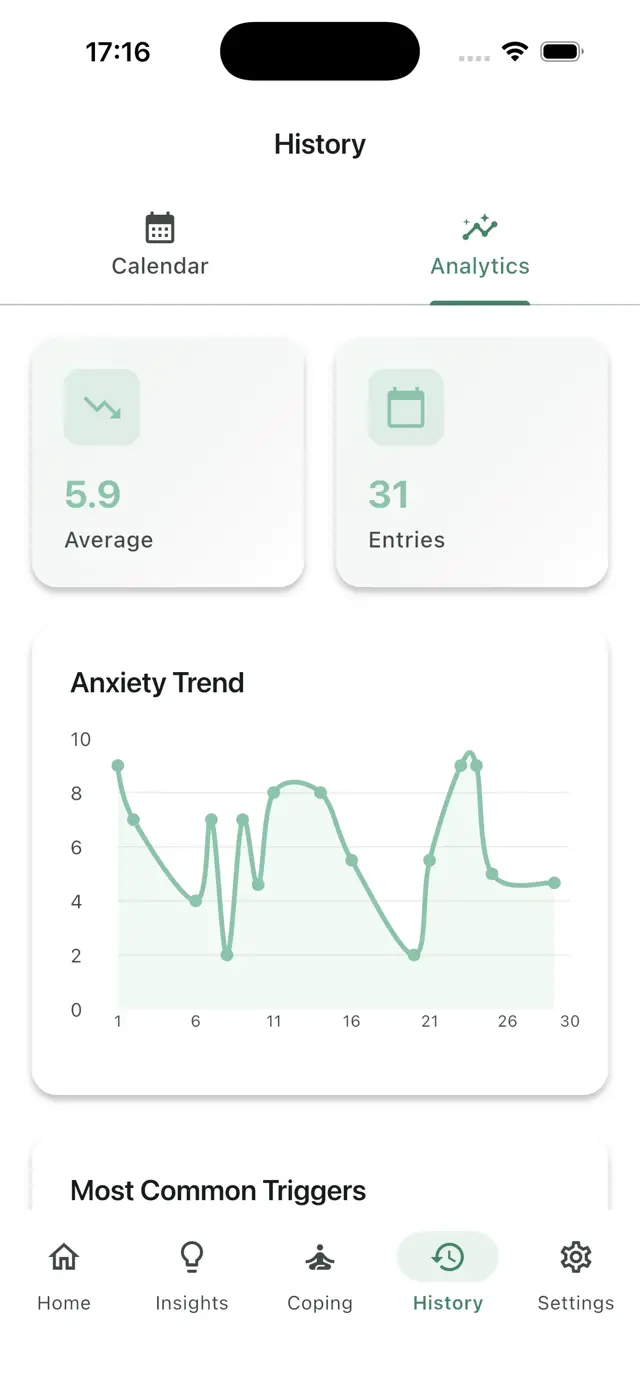
Track Your Progress
See how these techniques work for you over time with AnxietyPulse.
Frequently Asked Questions
Related Articles
5 Grounding Techniques for Immediate Anxiety Relief
Feeling overwhelmed? Discover 5 proven grounding techniques to stop anxiety attacks in their tracks and regain control of your mind and body.
The 3-3-3 Rule for Anxiety: A Quick Reset for Panic
Feeling overwhelmed? The 3-3-3 rule is a simple yet powerful grounding technique to stop a panic attack in its tracks. Here's how to use it.
Social Media & Anxiety: The Scroll That Never Ends
Is your feed fueling your anxiety? Discover why the infinite scroll triggers stress and how to reclaim your peace without deleting every app.