Grounding Exercises (5-4-3-2-1 Technique) for Health Anxiety (Illness Anxiety Disorder)
Grounding exercises interrupt health anxiety's characteristic body-scanning behavior by redirecting attention from internal sensations to external sensory stimuli. When you are trapped in a cycle of checking your pulse or examining a mole, deliberately shifting to what you can see, hear, and touch in your environment breaks the somatic fixation.
Health Anxiety (Illness Anxiety Disorder) — Common Symptoms
Body Scanning
Habitually monitoring body sensations — checking pulse, examining skin, pressing on lymph nodes — looking for signs of illness.
Somatic Amplification
Normal bodily sensations such as a headache or muscle twitch are perceived as more intense and threatening than they actually are.
Fatigue from Hypervigilance
The constant mental effort of monitoring the body for symptoms leads to exhaustion and can itself produce physical discomfort.
Reassurance Seeking
Repeatedly consulting doctors, researching symptoms online, or asking loved ones for confirmation that nothing is wrong.
Catastrophic Interpretation
Jumping to worst-case diagnoses — interpreting a headache as a brain tumor or a skipped heartbeat as heart failure.
Avoidance of Medical Information
Paradoxically avoiding health news, hospitals, or anything illness-related to prevent triggering the anxiety, or alternately seeking it compulsively.
Grounding Exercises (5-4-3-2-1 Technique) — Step-by-Step Guide
5 Things You Can See
Look around and name five things you can see. Be specific — instead of 'a wall,' say 'a white wall with a small crack near the ceiling.' The specificity forces your visual cortex to engage with reality rather than internal worry.
4 Things You Can Hear
Close your eyes and identify four distinct sounds. Listen for background noises you usually filter out — the hum of a fan, distant traffic, birds, your own breathing. Name each one to yourself.
3 Things You Can Touch
Notice three physical sensations right now. Feel the texture of your clothing, the temperature of the air on your skin, or the pressure of the chair beneath you. Press your fingertips together and notice the sensation.
2 Things You Can Smell
Identify two scents in your environment. If you cannot detect any, move to something you can smell — your coffee, your sleeve, a nearby plant. Scent has a direct neural pathway to the amygdala, making it particularly effective for calming.
1 Thing You Can Taste
Notice one taste in your mouth. Take a sip of water, chew a piece of gum, or simply notice the current taste. By the time you reach this step, your nervous system has typically shifted out of acute fight-or-flight mode.
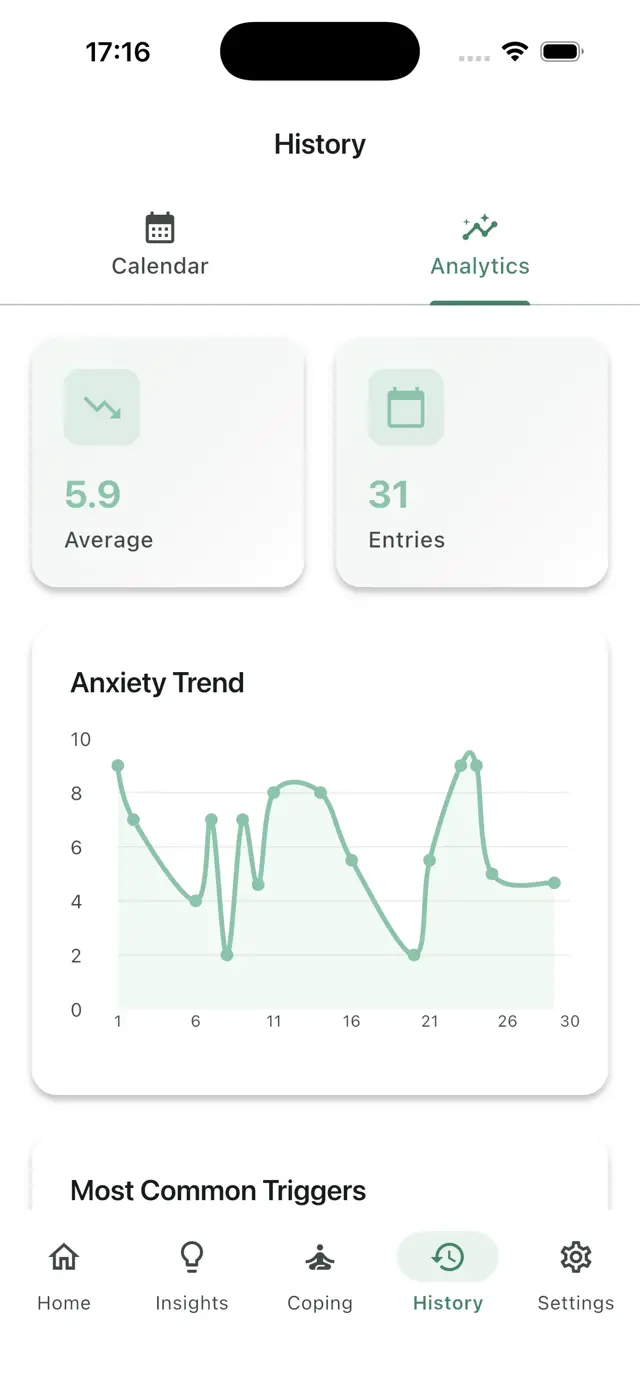
Track Your Progress
See how these techniques work for you over time with AnxietyPulse.
Frequently Asked Questions
Related Articles
5 Grounding Techniques for Immediate Anxiety Relief
Feeling overwhelmed? Discover 5 proven grounding techniques to stop anxiety attacks in their tracks and regain control of your mind and body.
The 3-3-3 Rule for Anxiety: A Quick Reset for Panic
Feeling overwhelmed? The 3-3-3 rule is a simple yet powerful grounding technique to stop a panic attack in its tracks. Here's how to use it.
Doomscrolling Anxiety: The Science & How to Stop
Learn the science behind doomscrolling anxiety, why negative news hooks our brains, and actionable tips to stop doomscrolling for better mental health.