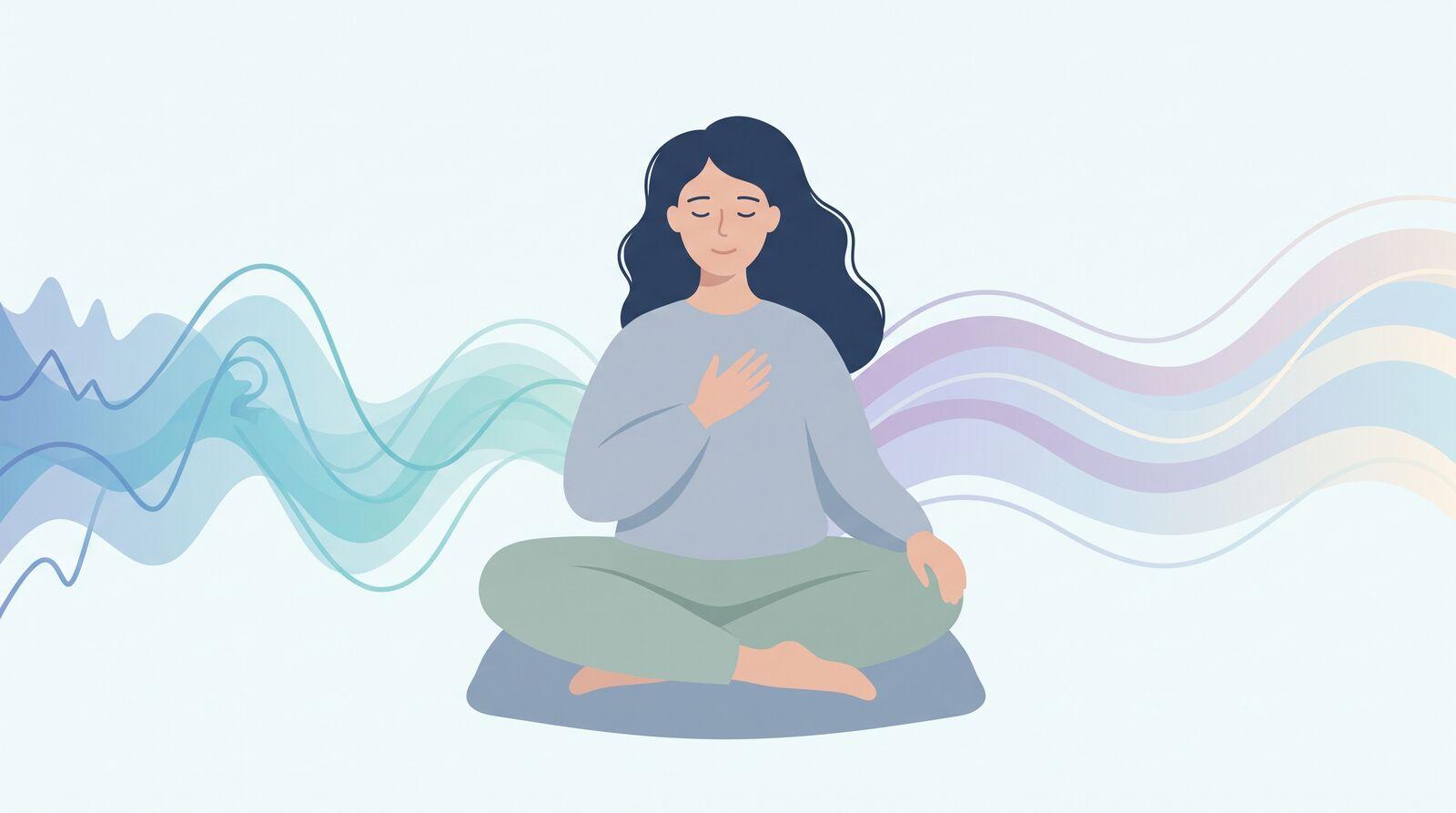
Your heart is slamming against your ribs. The air feels thin, like you cannot pull in a full breath. Your hands are tingling, the room seems slightly unreal, and a single thought is screaming louder than everything else: something is very wrong, and it is happening right now.
If you have felt this, you know that a panic attack does not feel like anxiety. It feels like an emergency. The cruel trick is that the sensations are real and physical, yet the danger your body is reacting to is not. Your nervous system has hit a false alarm, and every symptom you feel is that alarm doing exactly what it was built to do.
The single most useful thing to hold onto is this: a panic attack cannot hurt you, and it will end on its own. It peaks within about ten minutes and then fades, every single time. Your job is not to make it stop by force. Your job is to get through it without feeding it. This guide walks through how to do that, step by step, and then how to make the next one less likely.
First, Name What Is Happening
The moment you recognize "this is a panic attack, not a heart attack," you have already changed the outcome. Panic feeds on the story that you are in genuine danger. Correctly labeling the experience is not a small thing: it tells your thinking brain to stop pouring fuel on the fire.
The physical symptoms of panic can convincingly mimic a medical emergency, which is why so many people end up in the ER during their first one. If you have never had these sensations checked out, it is worth doing so once with a doctor for peace of mind. But if you know this pattern, the fastest way to shorten an attack is to say, silently or out loud: "This is panic. It is uncomfortable, not dangerous. It will pass." If you are still unsure whether what you experience is anxiety or a full panic attack, our guide on anxiety versus panic attacks breaks down the difference.
Step 1: Slow Your Exhale
The most powerful lever you have during panic is your breath, but not in the way most people assume. The instinct is to gulp in big, fast breaths, which actually makes things worse: it lowers carbon dioxide in your blood and produces the dizziness and tingling that convince you something is wrong.
The fix is to make your exhale longer than your inhale. A long, slow out-breath is the direct physical off-switch for the fight-or-flight response, because it activates the vagus nerve and the parasympathetic "rest and recover" system.
- Try the physiological sigh: two short inhales through the nose, then one long, slow exhale through the mouth. Repeat a handful of times. It is the fastest breathing pattern for calming the body, and we cover it in depth in our guide to the physiological sigh.
- Or count your breath: inhale for 4 seconds, exhale for 6 or more. Keep the exhale the long part.
Do not aim to feel instantly calm. Aim only to keep breathing slowly. The calm follows the breathing, not the other way around.
Step 2: Anchor Yourself in the Present
Panic pulls you into a spiral of catastrophic "what if" thoughts and a sense that reality is slipping. Grounding techniques cut through that by forcing your attention onto concrete, present-moment sensory input. This gives your racing mind a job that is incompatible with panic.
The classic tool is the 5-4-3-2-1 method:
- 5 things you can see
- 4 things you can hear
- 3 things you can touch or feel
- 2 things you can smell
- 1 thing you can taste
Name them slowly, in your head or under your breath. The point is not the list itself, it is that identifying real objects in the room pulls you out of the imagined disaster and back into a place where nothing is actually happening. For more options, our roundup of grounding techniques for anxiety relief has several you can practice ahead of time.
Step 3: Use Cold and Physical Sensation
When the mind is too loud for breathing or counting to land, a strong physical signal can interrupt the panic loop. Cold is especially effective. Splashing cold water on your face, holding an ice cube, or pressing something cold to the back of your neck triggers a reflex that naturally slows the heart rate.
Other physical anchors that help:
- Press your feet firmly into the floor and notice the support underneath you.
- Hold onto something solid, a chair or a countertop, and feel its weight and texture.
- Move gently. A slow walk gives the surge of stress hormones somewhere to go instead of spiraling in place.
These are not distractions in the dismissive sense. They give your overloaded nervous system a real, competing input to process, which loosens panic's grip.
Step 4: Stop Fighting It
This is the counterintuitive one, and it is the most important. The natural reaction to panic is to brace against it, to tense up and desperately try to shove it away. That resistance is precisely what keeps it going. Fear of the panic becomes a second layer of panic.
The way through is a kind of surrender. Let the wave rise. Tell yourself, "Okay. This is my body's alarm. I will let it run, and it will burn itself out." When you stop treating the sensations as a threat to be fought, you remove the fear that the attack feeds on, and it starts to lose power almost immediately.
Think of it like a wave in the ocean. Fight it and you get pulled under. Let it lift you and it passes beneath you. Panic always crests and always recedes, usually within a few minutes of you stopping the struggle.
After the Attack: Be Gentle
Once the peak passes, you will likely feel drained, shaky, or a little foggy. That is the flood of adrenaline working its way out of your system, and it is completely normal. Do not rush back into whatever you were doing.
Give yourself a few minutes. Sip some water, keep your breathing slow and steady, and let your body come down at its own pace. This is not the moment to interrogate yourself about why it happened or to brace for the next one. Treat yourself the way you would treat a friend who just went through something frightening: with patience, not criticism.
Preventing the Next One
Getting through an attack is a skill. Having fewer of them is a separate, longer project, and this is where understanding your own patterns pays off.
Panic attacks often feel like they come from nowhere, but they frequently have quiet contributors: a stretch of poor sleep, high caffeine intake, a period of accumulating stress, or skipped meals that leave blood sugar swinging. When your baseline nervous-system arousal is already high, it takes far less to tip you into a full attack. Lowering that baseline, through consistent sleep, movement, less caffeine, and regular slow breathing practice, raises the threshold before panic can trigger.
The tricky part is that these contributors are hard to spot from memory. After an attack, almost nobody can accurately reconstruct how they slept three nights running or how much coffee they had that morning. This is exactly where tracking earns its place. By logging your anxiety levels alongside sleep, caffeine, exercise, and stressful events in AnxietyPulse, you build a record that memory cannot. Over a few weeks, patterns surface that were invisible day to day: maybe your attacks cluster on low-sleep mornings, or after high-caffeine afternoons, or during particular stretches at work. Once you can see the setup, you can adjust it, and the goal shifts from surviving attacks to having fewer of them in the first place.
When to Get Extra Support
Self-help techniques are genuinely effective for managing panic, but they are not a replacement for professional care when attacks become frequent or start shrinking your life. Reach out to a healthcare provider if you are having repeated attacks, if you are avoiding places or situations for fear of triggering one, or if the fear of the next attack is becoming its own constant weight. Panic disorder responds very well to treatment, particularly cognitive behavioral therapy, and you do not have to white-knuckle it alone.
The Takeaway
A panic attack is a false alarm, not a real emergency, and it always ends. When one hits, name it for what it is, slow your exhale, ground yourself in the present, use cold or physical sensation if you need a stronger anchor, and above all stop fighting the wave. Afterward, be gentle with yourself. And over the longer term, track what surrounds your attacks so you can lower the baseline that makes them possible. You cannot always stop a panic attack from starting, but you can absolutely learn to move through it without fear, and that is what eventually makes them rarer and smaller.
This article is for informational purposes only and is not a substitute for professional medical advice. If you're experiencing severe or recurrent panic attacks, please consult with a healthcare provider.
