Cognitive Behavioral Therapy (CBT) Techniques for Panic Disorder
CBT for panic disorder uses interoceptive exposure — deliberately inducing mild panic-like sensations such as dizziness or rapid heartbeat in a controlled setting — to break the catastrophic misinterpretation cycle. By learning that these physical sensations are uncomfortable but not dangerous, patients decouple the sensation-fear link that drives panic escalation.
Panic Disorder — Common Symptoms
Heart Palpitations
A pounding, racing, or fluttering heartbeat that can feel like a heart attack, often the most frightening symptom during a panic attack.
Shortness of Breath
Feeling unable to get enough air or a sensation of being smothered, leading to rapid, shallow breathing.
Dizziness or Lightheadedness
Feeling faint, unsteady, or disconnected from your surroundings, often caused by hyperventilation during an attack.
Fear of Losing Control
An overwhelming sense that you are going to lose control, go crazy, or do something embarrassing during an attack.
Derealization
Feeling detached from reality or from yourself, as if the world around you is unreal or dreamlike.
Anticipatory Anxiety
Persistent worry about when the next panic attack will occur, leading to behavioral changes and avoidance of triggering situations.
Cognitive Behavioral Therapy (CBT) Techniques — Step-by-Step Guide
Identify the Anxious Thought
Write down the specific thought that is driving your anxiety. Be precise — instead of 'I'm anxious about work,' capture the exact fear: 'I believe my manager thinks I'm incompetent and will fire me.'
Examine the Evidence
List the concrete evidence that supports this thought, then list the evidence that contradicts it. Stick to facts, not feelings. For example: 'My last performance review was positive' counts as evidence against the thought.
Identify the Cognitive Distortion
Label the thinking pattern. Common distortions include catastrophizing (assuming the worst), mind-reading (assuming you know what others think), all-or-nothing thinking, and fortune-telling (predicting negative outcomes with certainty).
Reframe the Thought
Write a more balanced, realistic version of the thought. This is not positive thinking — it is accurate thinking. Example: 'My manager has given me constructive feedback, which is a normal part of work, not a sign I will be fired.'
Test the New Belief
Design a small behavioral experiment to test whether the reframed thought holds up. For example, ask your manager directly for feedback on your recent work. Track the outcome and compare it to your original prediction.
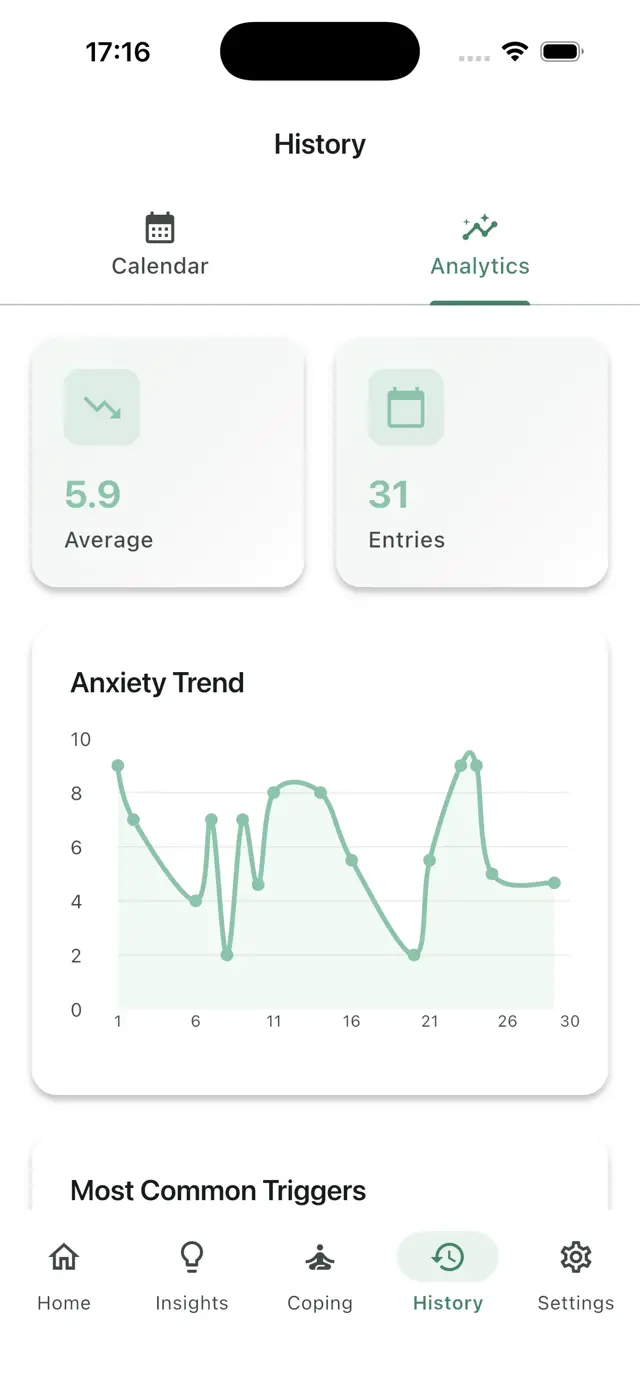
Track Your Progress
See how these techniques work for you over time with AnxietyPulse.
Frequently Asked Questions
Related Articles
5 Grounding Techniques for Immediate Anxiety Relief
Feeling overwhelmed? Discover 5 proven grounding techniques to stop anxiety attacks in their tracks and regain control of your mind and body.
The 3-3-3 Rule for Anxiety: A Quick Reset for Panic
Feeling overwhelmed? The 3-3-3 rule is a simple yet powerful grounding technique to stop a panic attack in its tracks. Here's how to use it.
Anxiety vs. Panic Attacks: What's the Difference?
Anxiety and panic attacks are often confused, but they're distinctly different experiences. Learn how to identify each, understand their causes, and find the right coping strategies.